E-mail: [email protected] Whatsapp: +8613647327093 Tel: +86-731-8403-0163
E-mail: [email protected] Whatsapp: +8613647327093 Tel: +86-731-8403-0163
In discussions about selecting interlocking Kelly bars, two typical viewpoints often emerge from construction sites and procurement teams.
One is a price-driven question: "Interlocking Kelly bars are indeed good, but they're more expensive. Aren't they only necessary for large-tonnage rigs or mega projects?"
The other comes from a generalized view of ground conditions: "Soft soil and sand layers can still be drilled successfully with standard Kelly bars. Wouldn't using an interlocking Kelly bar be a bit of overkill?"
These questions are not wrong in themselves—but they reveal a common misconception. Many people are accustomed to treating interlocking Kelly bars as a "universal upgrade," rather than as a professional tool designed for very specific working conditions.
In reality, the value of an interlocking Kelly bar has never been about "working in every ground condition." Its real purpose is whether, when construction enters the most demanding, unstable, and failure-prone stages, torque can still be transmitted steadily and reliably to the bottom of the hole.
In soft clay, silty soil, or general fill layers, drilling resistance is low and torque demand is limited. Under such conditions, the system's "weak points" are rarely exposed. The choice of Kelly bar does not dramatically affect performance, and the advantages of an interlocking Kelly bar are difficult to truly perceive.
However, once ground conditions change—when the rig starts facing high-strength rock, mixed strata with boulders, or weathered bedrock—drilling becomes intermittent. Torque is repeatedly loaded and unloaded, and construction difficulty rises sharply. At that point, the Kelly bar is no longer just a "connecting component," but a decisive factor that can determine success or failure.
It is precisely under such conditions that the original design intent of the interlocking Kelly bar is fully magnified.
What truly tests an interlocking Kelly bar is never "how fast it can drill when things are easy," but "whether it can keep drilling when conditions are at their worst."
Hard rock formations are exactly such a merciless testing ground.
Before discussing whether an interlocking Kelly bar is "necessary," one concept must first be clarified:
What exactly makes a "hard rock formation" hard in construction terms?
In real projects, hard rock is far more than simply "difficult to drill." It usually exhibits several typical characteristics:
1) Medium- to high-strength bedrock, such as transitions from strongly weathered to moderately weathered rock, slightly weathered rock, or even locally intact rock mass.
2) Dense rock structure with unevenly developed fractures, where localized hard spots frequently occur.
3) High compressive strength combined with high cutting resistance, meaning that every millimeter of advance requires stable and continuous energy input.
Such formations certainly demand strong "nameplate parameters" from the drilling rig, but more critically, they impose extremely strict requirements on the stability of the entire power transmission chain.
On site, hard rock conditions typically expose three major pain points.
First, extremely high torque demand—and not just momentarily high.
In hard rock drilling, the bit does not cut uniformly. It constantly encounters hard inclusions, interlayers, and sudden structural changes. This requires the interlocking Kelly bar to withstand sustained high torque with repeated load accumulation. Any loss in torque transmission efficiency will quickly be amplified into an inability to advance.
Second, frequent impact loads and reverse torque.
When the bit bites into the rock and then suddenly releases, reverse torque and instantaneous impacts are almost unavoidable. These unstable loads act directly on the Kelly bar's connection structures, repeatedly testing their engagement strength and fatigue resistance.
Third, highly discontinuous drilling with high risks of sticking and slippage.
Hard rock drilling is rarely a smooth, continuous process. Incremental advance, lifting, re-pressing, and re-advancing become the norm. Once torque transmission becomes unstable, slippage, stalling, or even stuck tools can easily occur.
Many issues that appear to be "the rig isn't powerful enough" are actually exposed in these critical moments.
This is why the real challenge of hard rock drilling is not merely whether the bit can cut the rock, but whether the entire system can maintain reliable power transmission under the combined effects of high torque, strong impacts, and discontinuous operation.
And these three pain points all place the interlocking Kelly bar itself under constant scrutiny—whether it can withstand load, absorb impact, and maintain stable engagement.
In real hard rock job sites, seemingly "illogical" phenomena are often observed.
The rig is new and of decent tonnage.
Engine power and maximum output torque look impressive on the specification sheet.
Yet once hard rock is encountered, drilling becomes noticeably difficult—pressure increases, but bottom-hole response remains weak.
Rotational speed cannot be raised, and the bit feels "dull" at the bottom.
On the surface it appears to be rotating, but in reality it is almost free-spinning against the rock.
The first reaction is often:
"Is the rig underpowered?"
"Do we need a bigger rig?"
But in many hard rock cases, the issue is not insufficient power, but a far more hidden yet critical factor—whether torque is actually reaching the drill bit.
From a technical standpoint, hard rock drilling is not simply about energy demand, but about sustained cutting under high resistance. Torque generated at the top must pass through the interlocking Kelly bar, joints, and engagement structures layer by layer. If any link in this chain slips, buffers, or dissipates energy, what appears at the bottom is only rotation without effective cutting.
This explains the common illusion in hard rock: rotation is visible, but effective cutting is nearly zero.
Hard rock does not necessarily mean lack of power. The real key is whether torque can be transmitted completely, steadily, and without loss under high load.
This issue is difficult to expose under normal conditions. In soft soil or sand, even with mediocre torque transmission efficiency, the bit can still "get by." But in hard rock, any slippage or energy loss is immediately magnified into a sharp drop in efficiency.
It is under these conditions that the significance of the interlocking Kelly bar truly emerges.
From first principles, an interlocking Kelly bar is not designed to achieve higher rotational speeds or to adapt to all ground types. Its core mission is singular: under high torque, heavy load, and repeated impacts, to deliver the rig's power to the bottom of the hole without compromise.
Once drilling enters hard rock, differences in efficiency are often not determined by the rigs themselves, but by whether the Kelly bar possesses genuine high-efficiency torque transmission capability.
To understand the advantages of an interlocking Kelly bar in hard rock, the key is not which bar is "more advanced," but how different structures are inherently suited to different problems.
In current foundation and drilling practice, friction Kelly bars and interlocking Kelly bars each have clear application boundaries. In the right conditions, both can perform well.
The working logic of friction Kelly bars is straight forward: torque is transmitted through clamping force and friction between outer tubes. In soft soil, sand, and relatively uniform strata, this simple structure responds quickly and can meet construction needs as long as friction is sufficient.
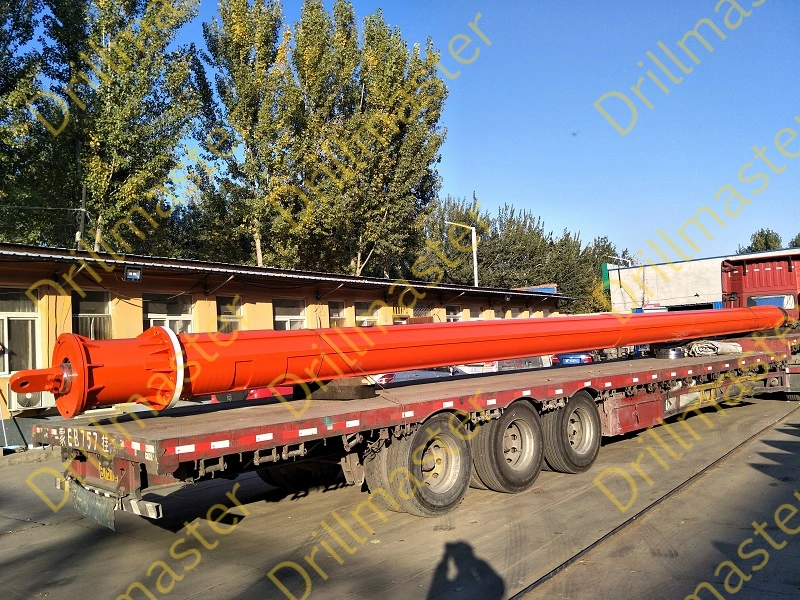
The problem is that friction itself is highly sensitive to working conditions.
Once entering hard rock, conditions change fundamentally:
1) Torque demand continues to rise.
2) Loads fluctuate violently.
3) Impacts and reverse torque occur frequently.
Under such circumstances, friction-based torque transmission becomes increasingly dependent on maintaining clamping force. Repeated high loads can cause micro-slippage at friction surfaces, and once slippage begins, torque transmission efficiency drops rapidly, creating a vicious cycle of "the more it works, the more it slips."
An interlocking Kelly bar follows a completely different logic. It does not rely on friction to "hold" torque, but on explicit mechanical engagement to transmit power rigidly. Torque is no longer dependent on clamping force, but is directly borne and distributed by structural elements.
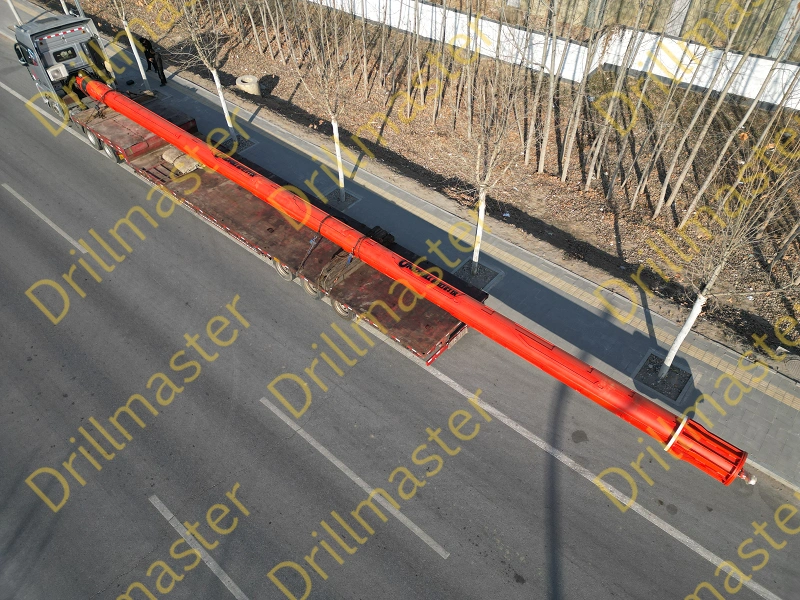
This leads to a critical difference in hard rock:
the higher the torque, the more pronounced the advantage of the interlocking structure.
Under high torque:
Loads are evenly distributed through locking teeth.
Engagement becomes tighter under compression.
Power transmission paths are clear and controllable.
It does not depend on friction coefficients or worry about degradation caused by dust, cuttings, or micro-deformation. At the most demanding stages, the interlocking Kelly bar becomes even more stable.
Thus, the load-bearing capability of an interlocking Kelly bar in hard rock is not achieved through frequent adjustments or operator intervention, but is a natural result of structural behavior under high load.
The conclusion is clear:
in hard rock conditions, the stability of an interlocking Kelly bar is determined by its structure—not by operational skill or on-site improvisation.
If sustained high torque tests whether a Kelly bar can withstand load,
then repeated start–stop cycles and impact conditions test whether it can last.
In hard rock drilling, progress is rarely linear.
More commonly, the operation follows a repetitive pattern: advance → lift → reapply pressure → advance again.
The drilling tool continuously probes the rock structure in search of a cuttable path. Once localized hard points, interlayers, or fractures are encountered, the drilling rhythm is frequently interrupted.
These working conditions share several defining characteristics:
rapid load changes, concentrated impacts, short force durations, and extremely high repetition frequency.
From a mechanical perspective, this is no longer just a question of "how much load can be carried," but whether the structure is prone to fatigue and cumulative damage under high-frequency load variation.
For a Kelly bar, repeated stress is mainly concentrated in two areas:
First, fatigue resistance at the engagement interface.
Every start, stop, and reverse torque subjects the engagement structure to a complete load cycle.
If the structural design is inadequate or load distribution is uneven, micro-deformation and wear will accumulate rapidly through repeated cycles, eventually manifesting as increased clearance, load imbalance, or even premature failure.
Second, shear and impact resistance at the joints.
In hard rock, when the drilling tool suddenly bites into the rock or releases abruptly, impact loads tend to concentrate at the joint areas first.
This not only tests material strength, but also the rationality of structural transitions and stress distribution.
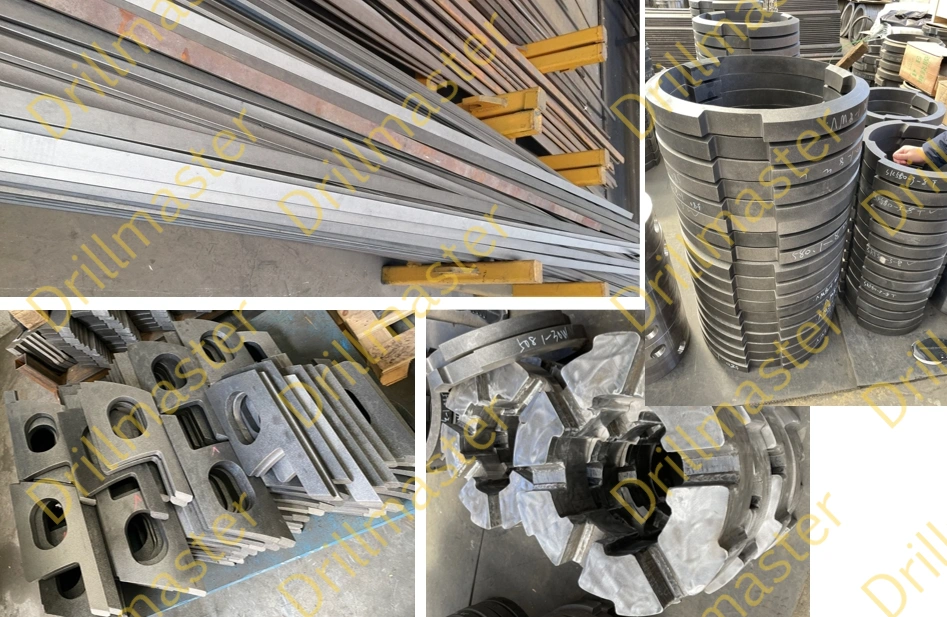
It is precisely under these high-frequency, discontinuous drilling conditions that the design advantages of the interlocking Kelly bar fully emerge.
An interlocking Kelly bar is not designed on the assumption that drilling will always be smooth. Instead, it is based on the premise that hard rock drilling inevitably involves repeated start–stop cycles and impact loading.
Through clear mechanical engagement and stable load paths, the interlocking Kelly bar can evenly distribute loads during every start and stop, avoiding localized overload.
When impacts occur, it does not rely on instantaneous friction to "forcefully resist" the load, but allows the structure itself to absorb and transfer impact energy.
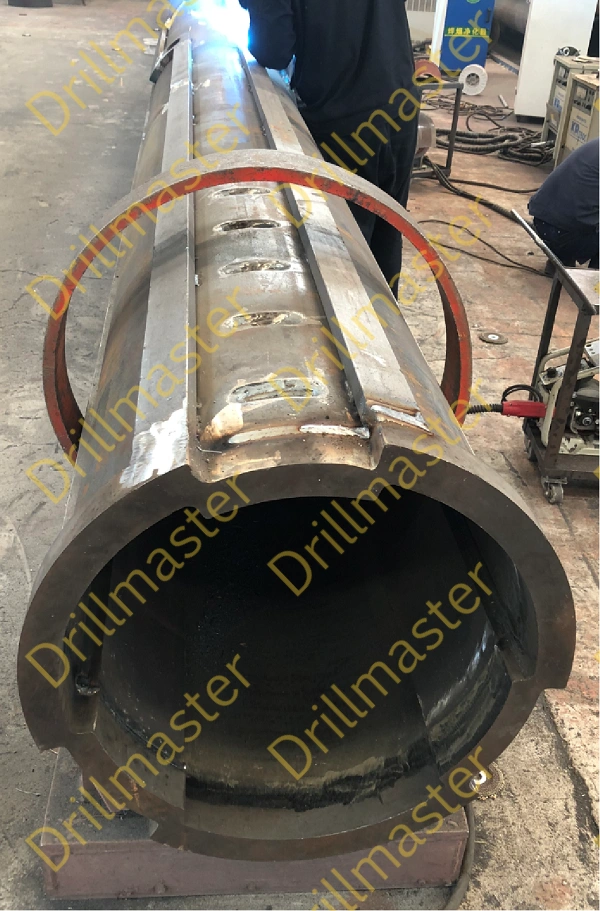
Therefore, the durability of an interlocking Kelly bar in hard rock is not simply because it is "stronger," but because it is genuinely designed for discontinuous drilling conditions.
Even under the harshest and most failure-prone environments, it can maintain engagement integrity and structural stability—qualities that are rare and extremely valuable in long-term hard rock operations.
In real market applications, a very interesting and realistic pattern appears repeatedly:
Once contractors are engaged in long-term hard rock drilling, they tend to "return to" interlocking Kelly bars—and rarely switch back again.
The reason is straightforward: the construction environment fundamentally changes the decision-making logic.
In projects dominated by soft soil and sand layers, drilling progress is relatively stable, resistance is predictable, and equipment risk is low.
Under such conditions, procurement decisions are often price-oriented—if basic construction requirements can be met, cost-effectiveness usually comes first.
However, once projects enter hard rock formations, priorities shift significantly.
For hard rock contractors, the first concern is never "how much cheaper," but "whether the job can be completed at all."
In hard rock construction, any unplanned downtime costs far more than the equipment itself:
1) The rig may be stuck in the hole, forcing construction to stop.
2) Labor, lifting equipment, and auxiliary machinery all remain idle.
3) Project milestones are delayed, increasing contractual and financial risks.
Under these circumstances, a single shutdown often results in substantial hidden losses.
More importantly, once problems occur in hard rock, the consequences are often chain reactions:
One instance of Kelly bar slippage may lead to abnormal tool wear.
One stuck incident may require bar replacement, disassembly, or even third-party rescue.
Broken or unretrievable Kelly bars can cause losses far exceeding the initial savings in purchase cost.
Once contractors have calculated this full cost, the price difference between products becomes the least important factor.
As a result, hard rock clients gradually form a very clear selection standard:
as long as the equipment is stable, reliable, and predictable, they are willing to pay a reasonable premium.
From this perspective, interlocking Kelly bars are repeatedly chosen by hard rock contractors not because they "look more advanced," but because they deliver certainty under the most difficult conditions.
What these clients truly purchase is not just a Kelly bar, but the certainty of completing the project under high-risk working conditions.
While emphasizing the advantages of interlocking Kelly bars, one point must be clearly stated:
Interlocking does not mean universal.
A mechanical locking structure is a design direction—not an automatic "hard rock passport."
Under hard rock conditions characterized by high loads, strong impacts, and long operating cycles, any weakness in design details will be rapidly magnified.
For an interlocking Kelly bar truly intended for hard rock drilling, several key factors must be taken seriously during selection and manufacturing.
First, locking tooth precision and effective contact area.
Interlocking Kelly bars rely on locking teeth to transmit torque. While the principle appears simple, machining accuracy, tooth profile design, and actual load-bearing contact area directly determine whether torque can be evenly distributed.
If tooth precision is insufficient or contact area is limited, load will concentrate on localized tooth surfaces under repeated high torque. It may "still work" in the short term, but wear and fatigue will accumulate extremely quickly.
Second, heat treatment processes and material consistency.
Hard rock drilling is not a one-time extreme condition, but long-term heavy-duty operation.
If material batch consistency is poor, or heat treatment depth and hardness distribution are uneven, localized premature failure is likely to occur under repeated impacts.
Such issues often do not appear at the early stage, but suddenly emerge after a period of use—causing serious disruption to construction schedules and safety.
Third, wear control capability under sustained heavy load.
Hard rock drilling tests not only how strong a new interlocking Kelly bar is, but whether its structure can maintain effective engagement after prolonged high-load operation.
Changes in tooth clearance due to wear, deformation control at joints, and overall structural stability after repeated load cycles all determine whether an interlocking Kelly bar is truly suitable for hard rock.
It is precisely in these details that the real differences between interlocking Kelly bars are fully revealed.
Hard rock is not a scenario for "learning by trial."
It is more like an amplifier:
any conservative or insufficient design choice will be amplified into efficiency loss, durability problems, or even construction risk.
Hard rock is not a testing ground—it is an amplifier.
Only interlocking Kelly bars that are designed and validated specifically for hard rock conditions can truly stand firm and last long.
Looking back at the entire discussion, one clear conclusion emerges:
Hard rock formations are the true battlefield of interlocking Kelly bars.
They are not designed to make rigs "faster" in soft soil or sand, nor to showcase premium configurations under easy conditions.
The value of an interlocking Kelly bar is magnified precisely at the most difficult moments—when construction equipment and crews are under maximum pressure.
In hard rock drilling, every incremental advance, every lift, and every high-torque transmission tests the Kelly bar's structural design, material quality, and manufacturing precision.
Only when the drilling tool encounters the hardest rock under the harshest conditions does an interlocking Kelly bar demonstrate its real capability:
transforming a task from "potentially stoppable" into "reliably achievable."
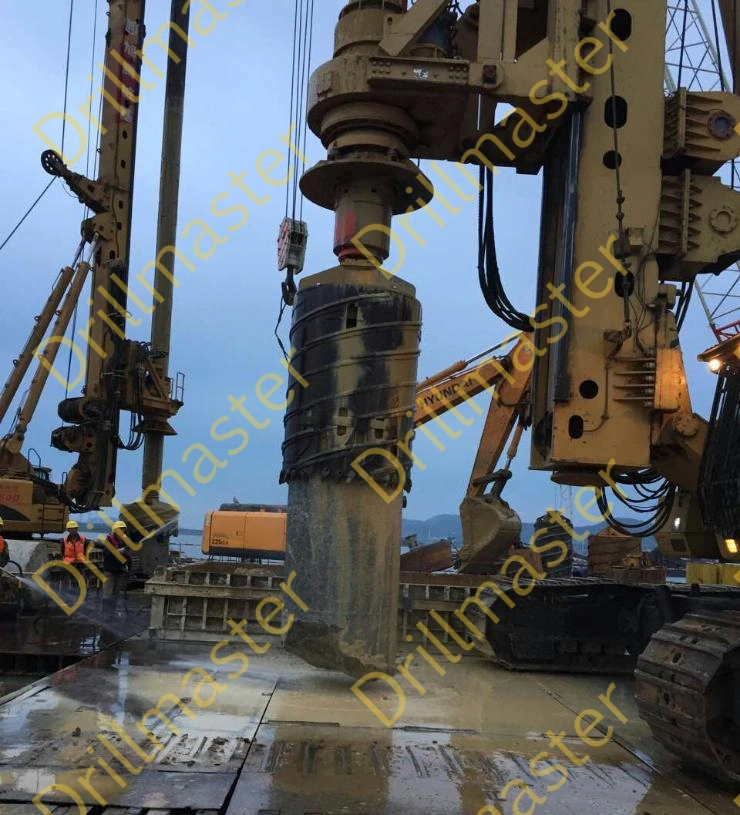
From both market and contractor perspectives, this is exactly why hard rock operators are willing to "return to" interlocking Kelly bars and rely on them over the long term.
What they purchase is never just a product, but construction certainty and safety under extreme conditions.
Only manufacturers who truly understand hard rock drilling will build interlocking Kelly bars to this standard.
This is not merely a question of one component's quality, but a reflection of deep understanding of construction processes, complex working conditions, and real customer value.
Where it is hardest, interlocking Kelly bars are needed most.
The complexity of hard rock drilling dictates that only truly professional design and precise manufacturing can keep equipment stable and reliable in the harshest environments.
Welcome to contact us if any needs on quality interlocking kelly bars.
WhatsApp: +8613647327093

Email: [email protected]
Contact Us