E-mail: [email protected] Whatsapp: +8613647327093 Tel: +86-731-8403-0163
E-mail: [email protected] Whatsapp: +8613647327093 Tel: +86-731-8403-0163
When people talk about the "speed of China's infrastructure" what often comes to mind are grand scenes:
crisscrossing high-speed railways, mega bridges spanning rivers and seas, supertall skyscrapers rising from the ground, and subways, utility tunnels, and underground urban spaces extending ever deeper below the surface. These projects are massive in scale, extremely time-sensitive, and place almost stringent demands on construction efficiency. As a result, "speed" has become one of the most distinctive labels of China's infrastructure development.
In the field of foundation piling, this "speed" is often attributed to larger machines—higher-tonnage rotary drilling rigs, more powerful drive systems, and greater main winch lifting capacity. The numbers on equipment specification sheets are naturally regarded as the core indicators of construction capability.
Yet on real job sites, experienced engineers understand clearly that what determines how many piles a rotary drilling rig can complete in a day is not only the machine in the cab, but the few cutting teeth that make first contact with the ground.
Compared with the whole machine, flat teeth, bullet teeth, and roller cone teeth are small, inexpensive, and barely noticeable. They are often regarded as mere "consumables" or even just "replaceable accessories". However, they perform the most direct and brutal work—making the first frontal contact and energy exchange with soil, gravel, and rock.
Whether drilling proceeds smoothly, whether cutting is effective, whether resistance is stable, whether tools wear unevenly, and even factors such as fuel consumption per pile, tooth replacement frequency, and downtime ultimately come down to one question:
Is that front-end cutting tooth truly suited to the current formation and operating conditions?
In other words, drilling efficiency, formation adaptability, and total cost per pile are often not determined by "the biggest machine", but by "the smallest cutting unit". This is the most easily overlooked—yet critically important—factor behind the speed of China's infrastructure development.
1. Tooth Forms in the First Generation of Rotary Drilling
In the early days when rotary drilling rigs began to be widely used in large-scale projects, the design goal of drilling teeth was straightforward—almost primitive: as long as they could penetrate the ground and form a hole, that was enough.
Common tooth forms at the time were simple welded teeth, flat or wedge-shaped, made of ordinary low-alloy or medium-carbon steel. These teeth were simple in structure, low in manufacturing cost, and easy to process and weld. They suited the prevailing construction environments dominated by soft soils, silty soils, and clays. Under such conditions, drilling teeth only needed to perform two basic tasks—breaking soil and carrying spoil—to meet drilling requirements.
However, this "good enough" design philosophy also defined their limitations:
1) Little emphasis on cutting efficiency
2) No systematic consideration of wear resistance or impact resistance
3) Almost no adaptability to complex formations
As project scales expanded and geological conditions became more complex, these shortcomings gradually became evident.
2. Typical Pain Points in Early Construction
Once drilling encountered hard interlayers, cobble layers, or alternating soft–hard formations, the weaknesses of early drilling teeth were rapidly magnified.
1) First, structural reliability was insufficient:
- Tooth bodies were prone to fracture under impact loads
- Welded joints failed due to fatigue and stress concentration
- Premature failure of individual teeth led to uneven cutting across the tool
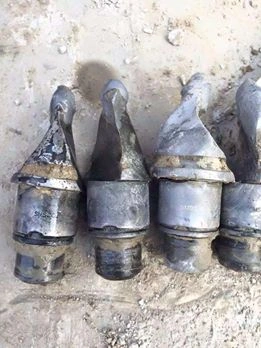
2) Second, they were almost powerless against complex formations:
- In cobble layers, teeth could not form effective cutting and only repeatedly squeezed and slipped
- In hard interlayers, penetration rates dropped sharply, drilling slowed, and machine load continued to rise
3) The most direct consequence was frequent tooth replacement.
Each replacement meant:
- Downtime
- Pulling the tool out
- Manual intervention
- Re-drilling
These seemingly scattered time losses were repeatedly amplified across a single pile, a project section, and an entire project—eventually turning into significant downtime costs and schedule pressure.
At this stage, contractors gradually realized a hard truth: the bottleneck of rotary drilling was not always whether the rig could rotate, but whether the teeth could actually cut.
It was through such on-site experience that drilling teeth began to evolve from "simple consumables" into genuinely critical engineering components—opening the door to deeper technological evolution.
If early drilling teeth addressed the question of "can we drill a hole", the introduction of bullet teeth marked the first real step into an era of efficient and controllable cutting.

1. Introduction and Popularization of bullet teeth
The core breakthrough of bullet teeth lay in a shift in structural design philosophy.
1) Unlike early fixed welded teeth, standardized bullet teeth typically adopt a round-shank, self-rotating structure:
- The pick is not rigidly fixed in the holder
- During cutting, it rotates under impact and friction
This seemingly simple design dramatically improved stress distribution. Rotation prevents wear from concentrating on one side of the tip, leading to more uniform wear and a significantly longer service life.
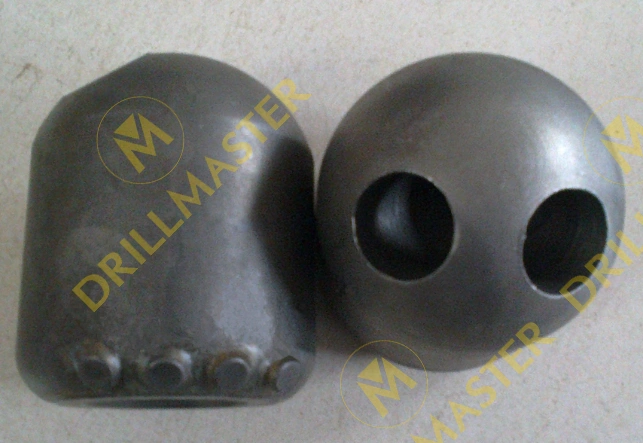
2) At the same time, replaceable designs transformed maintenance practices on site:
- Failure of a single pick no longer required cutting or re-welding
- Replacement time was reduced, minimizing downtime
- Tool maintenance became increasingly standardized and modular
In practice, such picks demonstrated two key advantages:
- More uniform wear, avoiding premature failure caused by uneven abrasion
- More stable cutting resistance, reducing load fluctuations on the rig
For rotary drilling rigs, this meant smoother torque curves and more controllable drilling rhythms—laying the foundation for tackling more complex formations.
2. The Breakthrough of Carbide Tips
If structural design determines how a pick works, carbide tips determine how hard it can cut.
As drilling progressed into interlayers, cobble layers, and even weathered rock, ordinary steel tips could no longer meet wear resistance requirements. The introduction of tungsten–cobalt carbide marked a key turning point.
However, progress at this stage was not simply about "the harder, the better". Field experience quickly showed that the balance between hardness and toughness was the real deciding factor:
- Too little cobalt → excellent wear resistance, but prone to chipping
- Too much cobalt → better impact resistance, but faster wear
Through continuous optimization of tungsten–cobalt compositions, differentiated pick designs emerged to suit varying impact and wear conditions.
This material-level breakthrough directly translated into construction performance:
- Significantly increased penetration per pile
- Smoother drilling processes
- Substantially reduced tooth replacement frequency
bullet teeth were no longer just "wearing more slowly"—they became genuine levers for improving construction efficiency.
Of course, the recent sharp rise in tungsten alloy costs has also driven drilling tooth prices steadily higher.
As infrastructure construction moved deeper and broader, the geological conditions faced by rotary drilling became increasingly complex—this was the fundamental force pushing drilling teeth toward specialization.
1. China's Geological Conditions: An Extreme Test
Unlike regions with relatively uniform geology, pile foundations in China often pass through multiple formations within short distances:
- Upper soft soils
- Middle cobble or boulder layers
- Lower strongly to slightly weathered rock
Combined with constraints such as deep urban excavations, ultra-long piles, and proximity to existing structures, demands on cutting efficiency and stability rose sharply.
Under such conditions, using a single "universal" tooth configuration often meant:
- Low efficiency
- Abnormal wear
- Unreliable hole quality
2. Emergence of Targeted Tooth Types
Changing engineering needs directly drove diversification:
1) Soil bullet teeth
Sharper tips
Lower cutting resistance
Emphasis on penetration rate
2) Rock bullet teeth
Blunter, thicker tips
Higher impact resistance
Suitable for hard interlayers and weathered rock
3) Reinforced impact-resistant teeth
Designed for cobble and boulder formations
Strengthened interfaces between body and carbide
At the same time, mixed layouts combining welded teeth and bullet teeth became common:
1) Welded teeth handle initial breakage
2) bullet teeth ensure continuous cutting and stable penetration
3) Synergy improves overall drilling efficiency
This "combined cutting" concept elevated tooth configuration from a single choice to a system-level design.
3. The Changing Role of Drilling Teeth
At this stage, drilling teeth underwent a key identity shift. They were no longer just consumables replaced as needed, but became part of the construction plan and formation adaptation strategy.
What teeth to choose, how to arrange them, and when to replace them began to directly affect:
- Drilling rhythm
- Equipment load
- Hole quality and cost control
As rotary drilling extended into harder rock, pure cutting alone could no longer balance efficiency and service life—roller cone teeth stepped onto the stage.
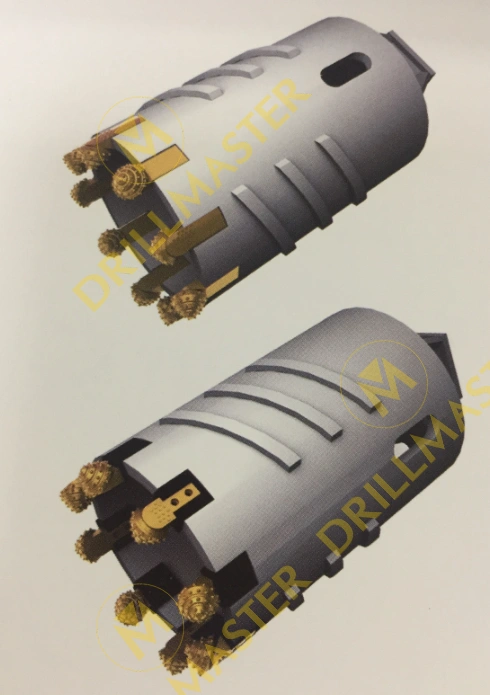
1. Application of Roller Cones in Pile Foundations
The working principle of roller cones differs fundamentally from bullet teeth:
High contact stress generated through rolling
Rock broken by a combination of rolling compression and shearing
This mechanism offers clear advantages in medium to hard rock, particularly in:
- Strongly weathered rock
- Moderately weathered rock
- Local slightly weathered formations
In such formations, roller cones often achieve higher efficiency with lower energy consumption.
2. Evolution of Roller Cone Tooth Forms
With deeper application, roller cones themselves diversified:
1) Insert-type roller cones
- High contact pressure per tooth
- Suitable for hard, dense rock
- Strong crushing capability
2) Milled-tooth roller cones
- Larger contact area
- Suitable for medium-hard and heterogeneous formations
- Smoother cutting
Tooth form selection directly determines rock-breaking efficiency, roller cone life, and drilling stability.
3. Synergy with bullet teeth
Notably, roller cones were never intended to replace bullet teeth. In most pile foundation projects, they function as complementary partners:
1) Bullet teeth:
Adapt to formation changes
Ensure continuous drilling
2) Roller cones:
Tackle localized hard rock
Boost efficiency in critical sections
Through rational combinations of tools and teeth, contractors can flexibly adjust drilling strategies to achieve optimal balance between efficiency, cost, and hole quality.
On site, drilling teeth from different brands or batches often look nearly identical—same pick type, same size, same carbide tip. Yet after a period of use, differences quickly emerge: some wear evenly and last consistently, while others chip, break, or detach prematurely. The real gap rarely lies in appearance—it lies in manufacturing details.
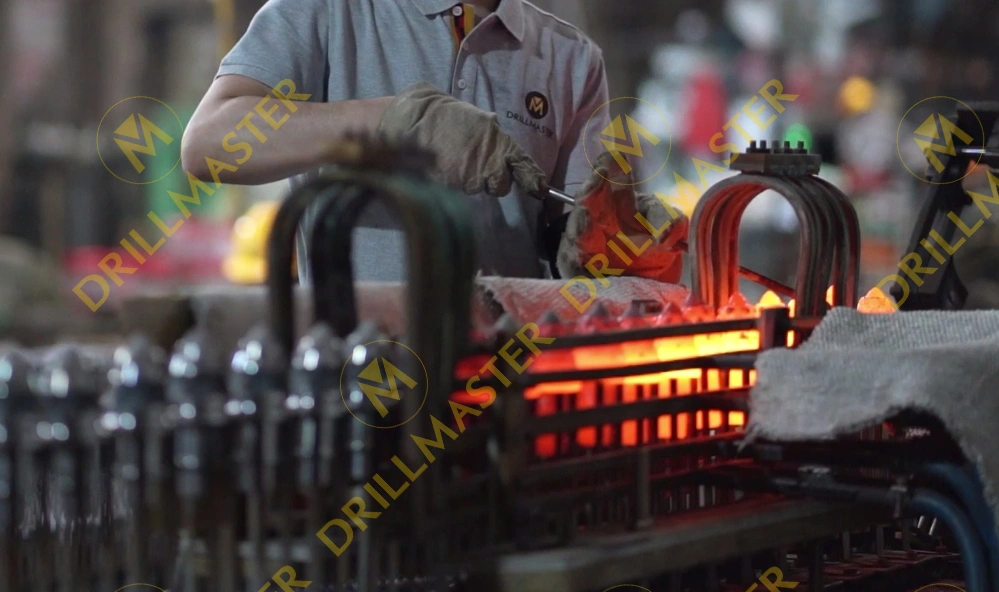
1. Materials and Heat Treatment
1) The tooth body material is the foundation of performance.
High-quality picks use dedicated alloy structural steels with clear requirements for strength, toughness, and fatigue life, while low-end products often rely on generic steels with unstable compositions and poor impact tolerance.
2) Heat treatment further widens the gap:
- Carburizing: improves surface hardness and wear resistance
- Quenching: provides a high-strength base structure
- Tempering: relieves internal stress and prevents brittle failure
Poorly controlled heat treatment may produce a tooth that looks hard on the surface but contains high residual stress inside—making it prone to microcracking and early failure under impact.
3) Internal stress control is an invisible watershed: unseen, yet decisive for long-term stability under heavy loads.
2. Welding and Assembly Precision
1) Failures do not always occur at the tip. In many real cases, problems arise at the interface between tooth body and holder:
- Poor fit between tooth and holder
- Excessive or insufficient assembly clearance
- Uneven welding heat input
These issues cause uneven load transfer and local stress concentration.
2) Weld quality is equally critical:
- Poor weld formation → fatigue cracking
- Unstable welding processes → large life variability
Under high-impact, high-vibration conditions, a seemingly insignificant weld often determines the service life of a tooth.
3. Why Can Similar Picks Differ by 2–3 Times in Life?
When material choice, heat treatment, assembly precision, and welding quality stack together, performance differences are systematically amplified. This explains a common but often overlooked phenomenon on site: teeth that look the same perform completely differently. Life differences are not about "luck", but about manufacturing systems and quality control.
As project scales grow and cost control tightens, purely experience-based tooth selection is giving way to more rational decision frameworks.
1. The Past: Experience-Led Decisions
For a long time, tooth selection relied on foremen's judgment: "This formation—use this tooth". While efficient in familiar conditions, this approach had clear limits:
- Difficult to quantify
- Hard to replicate
- Poor adaptability to new formations and conditions
2. The Present: Parameters and Feedback as the Basis
With improved rig monitoring systems and construction records, more quantifiable data are now included:
- Geological survey information
- Torque variation during drilling
- Actual penetration rates
- Tooth wear patterns and service life
By analyzing these data, contractors can reverse-verify whether a tooth truly suits the conditions.
This results-driven approach moves tooth selection away from subjective judgment toward verifiable and optimizable processes.
3. Drilling Teeth as Quantifiable Engineering Elements
When tooth life, penetration efficiency, and failure modes can be recorded and analyzed, teeth cease to be vague consumables and become manageable, optimizable engineering parameters—formally entering the construction management system.
In per-pile cost structures, the purchase cost of teeth is often minimal—one reason they were long ignored. But from a full-process perspective, their impact goes far beyond price.
1. Tooth Replacement Time = Downtime
Each replacement means the rig stops working. Downtime consumes labor and time, disrupts workflow, and reduces organizational efficiency. In schedule-critical projects, downtime costs often exceed tooth prices by far.
2. Inefficient Cutting = Higher Fuel Consumption
Mismatched or underperforming teeth cause:
- Higher cutting resistance
- Prolonged high-load operation
The result is increased fuel consumption and accelerated equipment wear.
3. Abnormal Wear = Hidden Costs
Uneven wear, chipping, and shank breakage not only shorten tooth life, but may:
- Damage holders
- Affect hole wall quality
- Increase difficulty of subsequent cleaning
These issues may not appear directly in "tooth costs", but they significantly raise overall project expenses.
4. Conclusion: Small Costs, Big Structures
Although drilling teeth account for a small direct share of per-pile cost, they determine:
- Drilling efficiency
- Energy consumption
- Downtime frequency
- Schedule risk
They leverage the entire cost structure of a pile. This is why more contractors are re-evaluating the value of this "small tooth".
Looking back, each evolution of drilling teeth was driven not by initiative, but by on-site demands. The future will be no different.
1. Stronger Formation Adaptability: From "Usable" to "Optimal"
Future teeth will no longer pursue "one tooth fits all", but focus on high adaptation to specific formations:
- More refined tooth geometries
- Clearer application boundaries
- More predictable performance
Through targeted design, teeth will consistently operate in the optimal efficiency–life window.
2. Longer Life and Predictable Wear
Durability matters—but knowing when to replace matters just as much. Future development will aim for:
- Stable wear patterns
- Controllable life variation
- Clear pre-failure indicators
This enables planned replacement, reduces unexpected downtime, and supports refined construction management.
3. Systematic Matching with Rigs and Tools
Teeth will no longer be treated as isolated components, but integrated into the construction system:
- Matched with rig torque characteristics
- Coordinated with tool structure and tooth layout
- Optimized in closed-loop with operating parameters
Under this system-level approach, tooth value lies not in single metrics, but in overall efficiency gains.
4. From "Selling Products" to "Providing Cutting Solutions"
As specialization deepens, simply selling teeth will no longer suffice. Competitive advantage will come from offering:
- Tooth selection advice
- Tooth layout design
- Usage and replacement strategies
Upgrading from "selling a tooth" to "solving a formation's cutting problem" represents a further amplification of tooth value.
This is exactly what we at Drillmaster are doing.
Returning to the original question—why is China's infrastructure so fast?
The answer may not lie entirely in massive, awe-inspiring machines. It also lies at the very front of the job site, in those repetitive yet critical details.
A small drilling tooth connects the rig's power output, complex geological conditions, and final hole quality. Every cut it makes is an accumulation of efficiency, experience, and technology.
True engineering progress rarely comes from a single "disruptive innovation". More often, it arises from these overlooked details—constantly refined, optimized, and evolved through practice.
And the fundamental logic behind China's infrastructure speed is precisely the quiet accumulation of countless such "small advances", converging deep underground.
Contact Us