E-mail: [email protected] Whatsapp: +8613647327093 Tel: +86-731-8403-0163
E-mail: [email protected] Whatsapp: +8613647327093 Tel: +86-731-8403-0163
If you visit pile foundation construction sites in recent years, you may notice a subtle yet telling change:
casing pipes seem to be getting shorter, while the number used on site is steadily increasing.
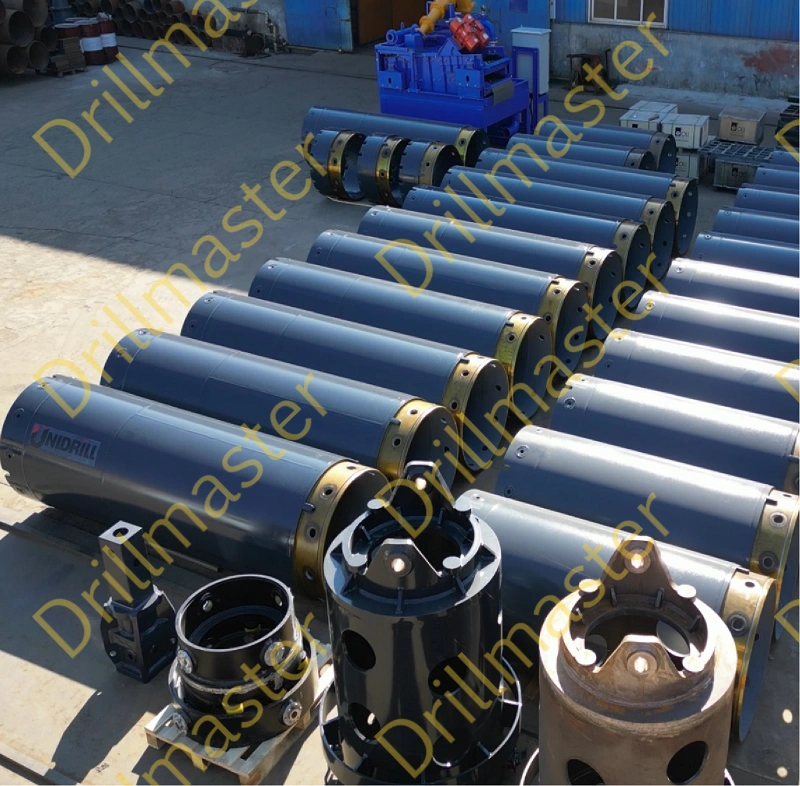
In the past, it was common practice to install a single long, one-piece steel casing in one operation to stabilize the borehole mouth and the upper soil layers. Once the casing was set, subsequent drilling felt relatively “secure.” However, in an increasing number of projects, this “one casing for the entire job” approach is quietly being challenged.
Replacing it is a process in which sectional casing segments are lowered, connected, and locked one by one. Construction no longer relies solely on a single large lift to complete the casing installation. Instead, on-site assembly allows the casing system to extend downward in sync with the drilling process. Casing is no longer a preparatory step that must be completed before work begins; it is gradually becoming an integral part of borehole formation itself.
This change is not the result of arbitrary adjustments in construction habits. Rather, it is driven by evolving engineering conditions. As boreholes become deeper, geological conditions more complex, and construction sites more constrained, the limitations of traditional casings—particularly in flexibility, adaptability, and risk control—are increasingly exposed.
This naturally raises a key question:
Why are more and more projects no longer satisfied with a single, one-piece casing?
What long-standing but often overlooked problems of traditional casings are sectional casing systems actually solving?
The answer does not lie in any single component, but in a fundamental shift in casing structure logic and construction methodology.
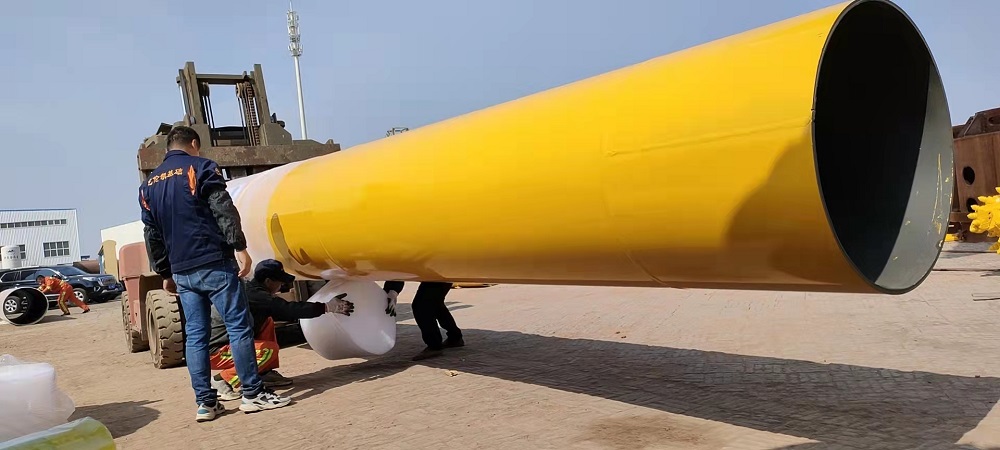
For a long time, one-piece steel casings were almost a “standard configuration” in pile foundation construction.
With simple structures, intuitive load paths, and clear construction logic, they have been repeatedly validated in numerous projects when combined with mature lifting techniques, making them a well-established and reliable casing solution.
1. Structural Characteristics: Simple and Direct, but Highly Dependent on Site Conditions
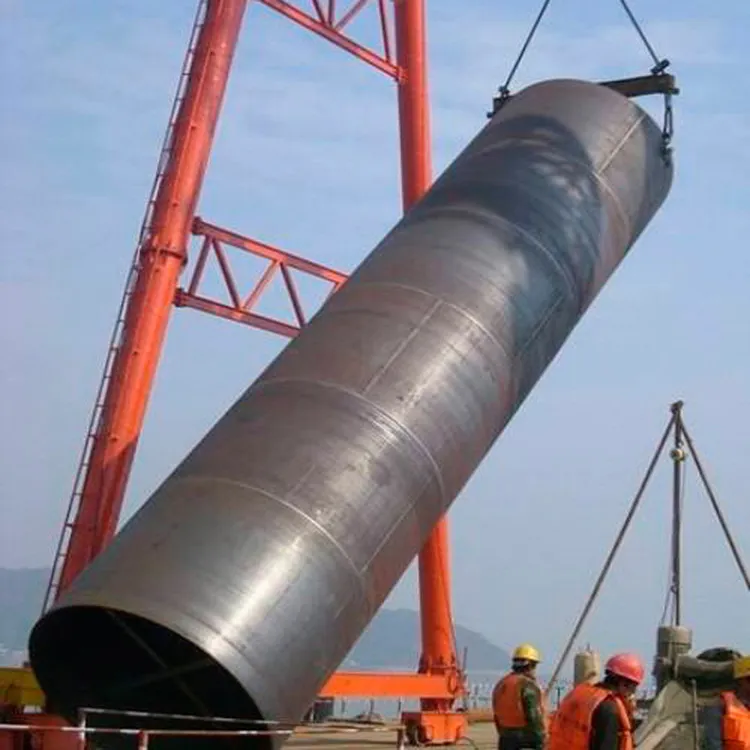
Traditional casings are typically one-piece, single-segment steel structures, with lengths determined during the design stage. During construction, they are lifted as a whole using large cranes and installed vertically in a single operation.
Their advantage lies in high rigidity and strong stability. Especially at the borehole mouth and in loose upper soil layers, they can quickly form a reliable “rigid protective barrier,” effectively preventing collapse, backfill, and slurry loss.
At the same time, however, this structure inherently depends heavily on construction conditions.
The longer the casing, the higher the requirements for lifting capacity, site space, and transportation. Once project conditions change, the casing itself offers almost no room for adjustment.
2. Typical Application Scenarios: Excellent Performance Under “Standard Conditions”
Traditional casings still offer strong practical value under the following conditions:
- Shallow boreholes with limited casing depth requirements
- Areas with relatively uniform and stable geology
- Construction sites with ample space and sufficient lifting capacity
Under these circumstances, a single casing can quickly stabilize the borehole entrance. Construction workflows are straightforward, crews are familiar with operations, and overall efficiency and reliability remain highly controllable.
This is precisely why traditional casings continue to be widely used today and have not been “completely phased out.”
3. Emerging Pain Points: When Conditions Are No Longer “Standard”
Problems arise in an increasing number of non-standard projects.
First, transportation and lifting costs continue to rise. Long casings consume significant resources during transport, loading, unloading, and on-site lifting, and carry higher risks. When site space is limited or lifting capacity is insufficient, construction organization becomes substantially more difficult.
Second, when borehole depth varies significantly or geological conditions are complex, fixed-length casings often prove inadequate:
- If too short, deep weak layers receive insufficient support;
- If too long, unnecessary construction costs and operational risks increase.
More importantly, the protective function of traditional casings is mainly concentrated at the borehole mouth and shallow depths. In deep soft soils, flowing sand, or cobble-mixed strata, borehole stability still relies heavily on slurry performance and operator experience. If control is insufficient, collapse and diameter reduction remain common issues.
In addition, because one-piece casings cannot be disassembled, any deformation, wear, or local damage during construction often results in the entire casing being scrapped, increasing costs and disrupting construction continuity.
None of this means that traditional casings are “obsolete.” Rather, it indicates that as engineering conditions become more complex and refined, single, fixed casing solutions are gradually falling behind evolving construction demands.
Rather than being a simple improvement on traditional casings, sectional casing systems represent a redefinition of casing logic itself.
The core idea of traditional casings is to complete borehole support in a single step using one integral component. Sectional casing systems, by contrast, break “borehole support” into a process that can be controlled, adjusted, and extended.
1. Modular Structural Design: From “One Piece” to “One System”
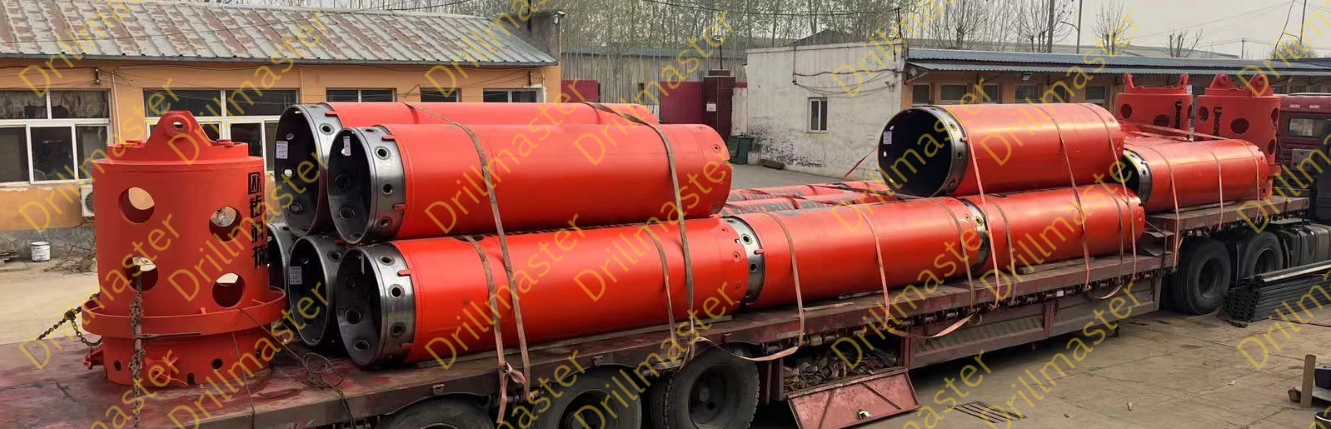
Sectional casing systems consist of multiple short casing modules, each functioning as an independent unit. Connected through standardized interfaces, these modules can be quickly assembled on site and disassembled or replaced as needed.
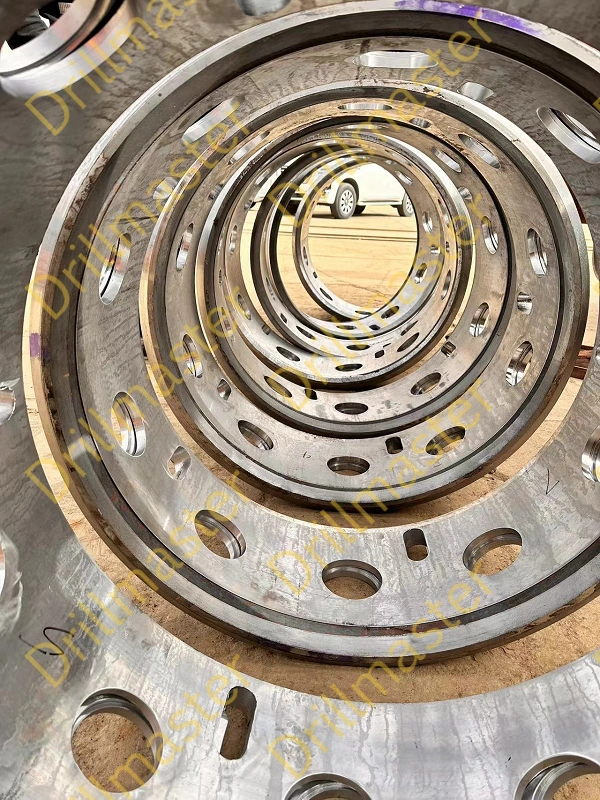
The most significant change introduced by modular design is this:
casing length is no longer constrained by a fixed dimension, but can be freely configured based on actual borehole depth and geological conditions.
During construction, casing segments are lowered and locked step by step as drilling progresses—providing support exactly where it is needed. When encountering sudden geological changes or depth adjustments, crews do not need to abandon the original plan; they simply add or remove casing segments accordingly.
Structurally, sectional casings are no longer isolated components, but a scalable and adjustable borehole support system.
2. A Fundamental Change in Working Method: Casing as Part of the Drilling Process
An even deeper change lies in how the system works.
In traditional construction, casing installation is a preparatory operation:
casing installed → stability confirmed → drilling begins.
Once in place, the casing’s function and coverage remain fixed, and subsequent work must adapt to those conditions.
Sectional casing systems change this rhythm.
Support is no longer completed in one step, but advances in sync with borehole formation. As drilling reaches a certain depth, the next casing segment is immediately installed; when geological conditions change, the support strategy adjusts accordingly.
The core advantage of this approach is synchronization:
- Casing and drilling occur almost simultaneously
- Borehole wall exposure time is significantly reduced
- Risks are no longer concentrated at a single construction stage
Casing shifts from a “static component” to a dynamic control process—the most fundamental difference between sectional casing systems and traditional casings.
1. Key Parameter Comparison Table
| Comparison Dimension | Traditional Casing | Sectional Casing System |
| Structural Form | One-piece, single-segment steel casing | Multiple short segments, modular assembly |
| Installation Method | One-time full installation | Installed segment by segment during drilling |
| Length Adaptability | Fixed length, difficult to adjust | Flexible segment count based on depth |
| Support Coverage | Mainly borehole mouth and shallow layers | Extendable to any required depth |
| Adaptability to Complex Geology | Relies on slurry and experience | Active risk control through structural support |
| Lifting Equipment Requirement | Requires high-capacity cranes | Lightweight segments, lower equipment demand |
| Site Space Requirement | Large operating and storage space | Suitable for constrained sites |
| Transport and Storage | Long dimensions, inconvenient transport | Modular transport, flexible turnover |
| Damage Handling | Local damage often scraps entire casing | Individual segment replacement |
| Risk Control Capability | Centralized, passive risk management | Distributed, process-controlled risk management |
2. Key Differences Explained: Not Just Form, but Construction Logic
1) Structure and Installation: From “One-Time” to “Process-Based”
Traditional casings are structurally simple and intuitive, but rely on one-time completion. Once installed, the casing configuration is fixed.
Sectional systems divide support into controllable stages, allowing casing and drilling to progress together, significantly reducing system-wide risk from single-point failures.
2) Construction Adaptability: Fixed Plans vs. Dynamic Adjustment
In projects with large depth variations or complex geology, fixed-length casings are often either insufficient or excessive.
Sectional casings allow crews to decide how many segments to install and when, achieving true “on-demand support,” particularly suited to heterogeneous or uncertain ground conditions.
3) Equipment and Site Requirements: Which Is More Site-Friendly?
Long casings require significant lifting capacity and site space, often becoming a constraint in urban or restricted environments.
Short, lightweight segments reduce dependence on heavy equipment and offer far greater flexibility in site layout and logistics.
4) Cost and Risk Control: The Invisible Gap
At the component level, traditional casings may not appear more expensive. But over the entire construction cycle, hidden costs—transport, lifting, deformation, scrapping, and rework—are magnified in complex projects.
Sectional casing systems localize losses and distribute risk. A problem in one segment does not compromise the entire system, which is precisely why their structural risk-isolation capability is increasingly valued.
The reason why segmented casing systems are gradually replacing traditional one-piece casings in an increasing number of projects is not simply because they are “divided into sections.”
The real value lies in the modular design philosophy behind them, which brings a higher level of control to construction operations.
1. Stronger adaptability to site conditions: dividing risk instead of resisting it blindly
In complex formations such as soft clay, flowing sand, or gravelly layers, borehole stability is rarely a single, uniform problem.
Instead, risks often vary significantly at different depths and in different zones.
Modular casing systems are designed precisely for this non-uniform risk distribution.
By installing the casing in stages and supporting the borehole layer by layer, contractors can focus structural support where it is truly needed—rather than being forced to rely on a single casing specification to “cover all scenarios.”
Depending on borehole depth and geological conditions, the number of casing segments, their lengths, and the installation sequence can all be adjusted flexibly, enabling a genuinely demand-driven configuration.
This capability is especially valuable in projects with frequent geological changes or insufficient preliminary investigation data.
2. More controllable construction rhythm: borehole support no longer slows down progress
In traditional construction methods, casing installation is often an independent and unavoidable critical step.
Once problems occur during lifting, alignment, or installation, the entire construction process may be forced to stop.
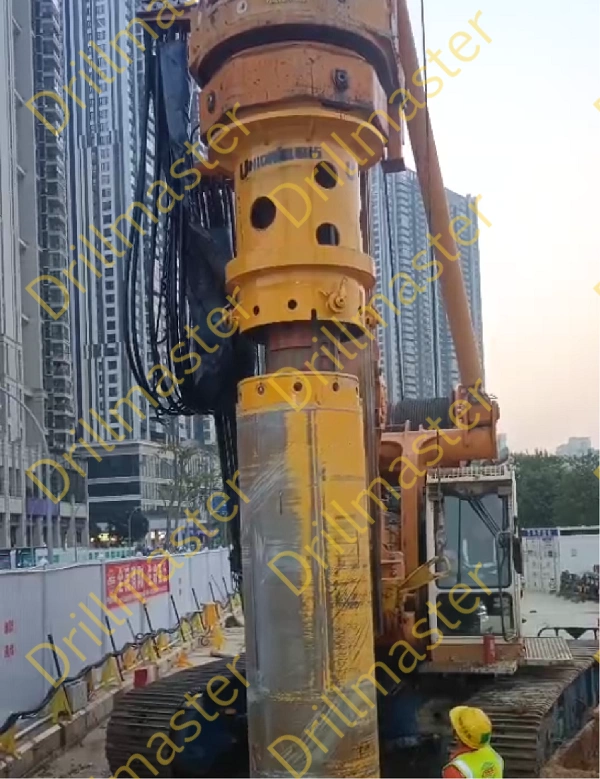
Segmented casing systems break this limitation by integrating borehole support directly into the drilling process.
Support progresses in parallel with drilling—where drilling advances, casing follows.
This reduces idle time and prevents rework caused by prolonged exposure of unsupported borehole walls.
As a result, construction becomes smoother and more continuous, and project progress is no longer constrained by a single high-risk operation.
3. Easier transportation and asset management: from “heavy assets” to reusable systems
From a project management perspective, long one-piece casings usually imply high transportation costs, storage pressure, and scrapping risks.
The larger the casing, the more difficult it is to manage—and any damage often results in the loss of an entire component.
Segmented casing systems consist of smaller, lighter modules that are easier to transport and dispatch on site.
More importantly, the modules are interchangeable. If one segment becomes worn or deformed, only that specific module needs to be replaced, without affecting the usability of the entire system.
This gradually transforms casing systems from consumable components into reusable, maintainable engineering assets.
4. Better alignment with modern system-based engineering thinking
At a higher level, the value of modular design goes beyond construction convenience—it represents a shift in engineering philosophy:
Instead of relying on a single “all-purpose component,” complex problems are addressed through systematic combinations.
Segmented casing systems emphasize adjustability, repeatability, and continuous optimization of the overall borehole support solution.
The same system can be reused across different projects through different configurations, allowing construction experience to be accumulated and replicated rather than treated as one-off, site-specific improvisation.
This is the fundamental reason why modular casing systems align more closely with modern engineering management and risk control principles.
Segmented casing systems are not the “only solution” for every project.
However, under certain typical conditions, their advantages become significantly amplified. The following project types are often the earliest—and most suitable—candidates for adopting segmented casing systems.
1. Deep and ultra-deep pile foundation projects
As foundation designs move toward larger diameters and greater depths, borehole support is no longer limited to the near-surface zone.
The limitations of traditional casings in terms of length and installation risk become particularly evident in deep projects.
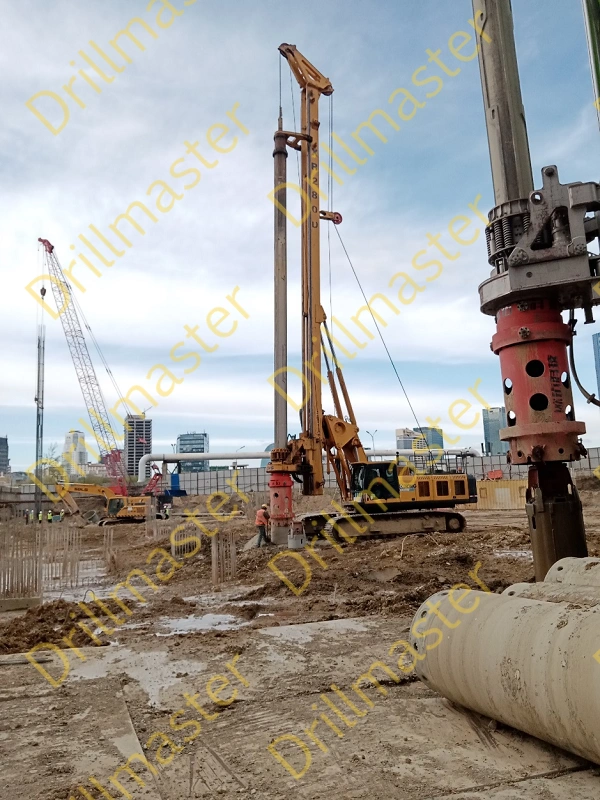
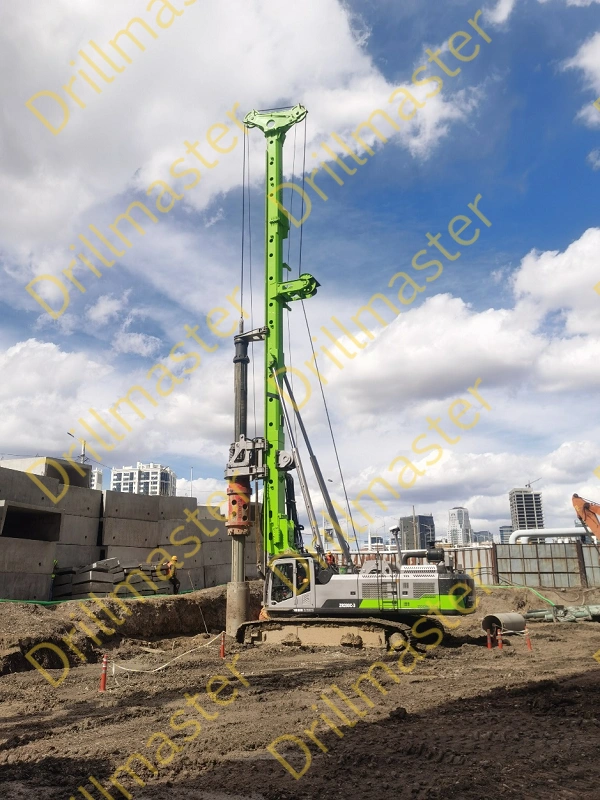
Segmented casing systems allow borehole support to extend gradually as depth increases, avoiding the lifting risks and uncertainties associated with installing extra-long casings in one operation.
For deep and ultra-deep piles, this “drill-and-support simultaneously” approach significantly improves construction safety and process controllability.
2. Complex and frequently changing geological conditions
In areas with soft soils, flowing sand, gravel layers, fill, or alternating strata, borehole stability typically exhibits clear depth-dependent characteristics.
Segmented casing systems can adapt support length and installation timing according to the geological conditions at different depths, concentrating structural support in high-risk zones rather than distributing it uniformly along the entire borehole.
This targeted support strategy is particularly suitable for projects with heterogeneous ground conditions or uncertain investigation data.
3. Projects with limited space or lifting capacity
In dense urban areas, municipal renovation projects, or sites adjacent to existing structures, working space is often restricted and large lifting equipment is difficult to deploy.
With smaller and lighter individual segments, segmented casing systems significantly reduce requirements for lifting height and site space, enabling flexible construction even under constrained conditions.
This gives them clear practical advantages in urban pile foundations, municipal utility corridors, and renovation or expansion projects.
4. Projects with strict requirements for borehole stability
For projects with high load requirements and strict quality control—such as major bridges, high-rise buildings, or works highly sensitive to sediment thickness and borehole diameter reduction—borehole stability directly determines the quality of subsequent processes.
By shortening exposure time and ensuring continuous structural support, segmented casing systems effectively reduce risks such as collapse and necking, creating more stable conditions for cleaning, reinforcement cage installation, and concrete placement.
In such projects, segmented casing systems are often not merely an “optional solution,” but rather a quality assurance measure.
A review of the previous comparisons makes it clear that the changes brought by segmented casing systems go far beyond a simple “change in casing form.”
They represent an upgrade in construction philosophy.
Traditionally, borehole support has been viewed as a specific component-related task: select a casing of suitable length, install it securely, and the support work is considered complete.
However, in complex ground conditions and deep boreholes, support is never a static issue—it is a dynamic control process throughout the entire drilling operation.
Effective borehole support depends not only on whether a casing is used, but on where, how, and when support is introduced.
This means that borehole support should be understood as a process control solution, rather than a single structural component.
Segmented casing systems are a direct result of this conceptual shift.
Through modular design, support is broken down into controllable and adjustable stages; through flexible installation, support is applied precisely at risk points; and through synchronized construction logic, risks are addressed proactively rather than through post-failure remediation.
Modularity, flexibility, and proactive risk control are not incidental advantages—they represent the broader construction trend embodied by segmented casing systems.
Returning to the question raised at the beginning of this article:
Why are segmented casing systems gradually replacing traditional casings?
The answer is straightforward.
As projects become deeper, more complex, and more demanding in terms of precision, single, rigid, one-time support methods can no longer cover all construction risks.
Segmented casing systems offer a more rational solution in terms of structural logic, construction adaptability, and risk control.
They do not negate the value of traditional casings.
Rather, under conditions of increased complexity, they provide an option that better matches real-world engineering needs:
- A clearer structural logic, where support no longer relies on “one-time installation”.
- Stronger construction adaptability to changing ground conditions and site constraints.
- Better alignment with the long-term demand for systematic and controllable construction in complex projects.
For these reasons, their adoption has not been sudden, but steady—validated repeatedly through practical application.
Looking ahead, truly competitive borehole support solutions may not be defined by “how thick the casing is,” but by whether the underlying engineering logic of borehole support is fully understood.And this, ultimately, is why segmented casing systems continue to be adopted and are steadily becoming the mainstream choice.
Contact Us