E-mail: [email protected] Whatsapp: +8613647327093 Tel: +86-731-8403-0163
E-mail: [email protected] Whatsapp: +8613647327093 Tel: +86-731-8403-0163
Double-wall casing is a type of casing used for borehole support in foundation piling. It consists of two steel pipe walls, an inner wall and an outer wall, connected by spiral ribs, reinforcing ribs, or other structural elements to form a composite steel pipe with a hollow interlayer.
It is primarily used in foundation engineering projects such as rotary bored piles and full casing construction. During drilling, it supports the borehole walls, prevents soil collapse, and provides stable borehole conditions for drilling and subsequent concrete pouring.
• Outer Wall: In contact with the surrounding soil, it withstands lateral earth pressure and external forces generated during construction.
• Inner Wall: Forms the internal passage of the casing, providing space for drilling tools and drilling operations.
• Internal Ribs: Connect the inner and outer walls, support the two steel pipes, and improve overall stiffness and resistance to deformation.
• Casing Joint: Connects individual casing sections and transfers torque, axial compression, and extraction forces.
| Function | Description |
| Borehole Support | Prevents borehole collapse in loose soil, sandy formations, and groundwater conditions. |
| Improved Structural Stiffness | The double-wall structure and internal ribs work together to enhance resistance to deformation. |
| Load Transfer | Withstands construction loads generated during rotation, pressing, and extraction. |
| Adaptability to Complex Ground Conditions | Improves casing reliability in unstable formations. |
| Reusability | With proper design and maintenance, the casing can be reused for multiple pile holes. |
| Comparison | Single-Wall Casing | Double-Wall Casing |
| Structure | Single steel pipe wall | Inner and outer steel walls connected by structural elements |
| Stiffness | Mainly depends on the thickness of the single wall | Provided by the combined action of the inner wall, outer wall, and internal ribs |
| Weight | Generally lighter at the same outer diameter | Generally heavier and more complex |
| Manufacturing Cost | Relatively low | Generally higher |
| Typical Applications | General borehole support conditions | Applications requiring higher stiffness, deformation resistance, and load-bearing capacity |
Double-wall casing is not simply made by placing one steel pipe inside another. The internal ribs between the two walls serve several important functions:
• Maintain the structural spacing between the inner and outer walls.
• Limit local deformation of both walls.
• Transfer construction loads between the inner and outer walls.
• Improve the overall structural stability of the casing.
Double-wall casing can be classified into different structural types according to the number, cross-sectional shape, and arrangement of the internal ribs, as well as their resulting structural performance and manufacturing characteristics.
The three common types discussed here are multi-rib spiral, square-rib circular, and single-rib spiral structures.
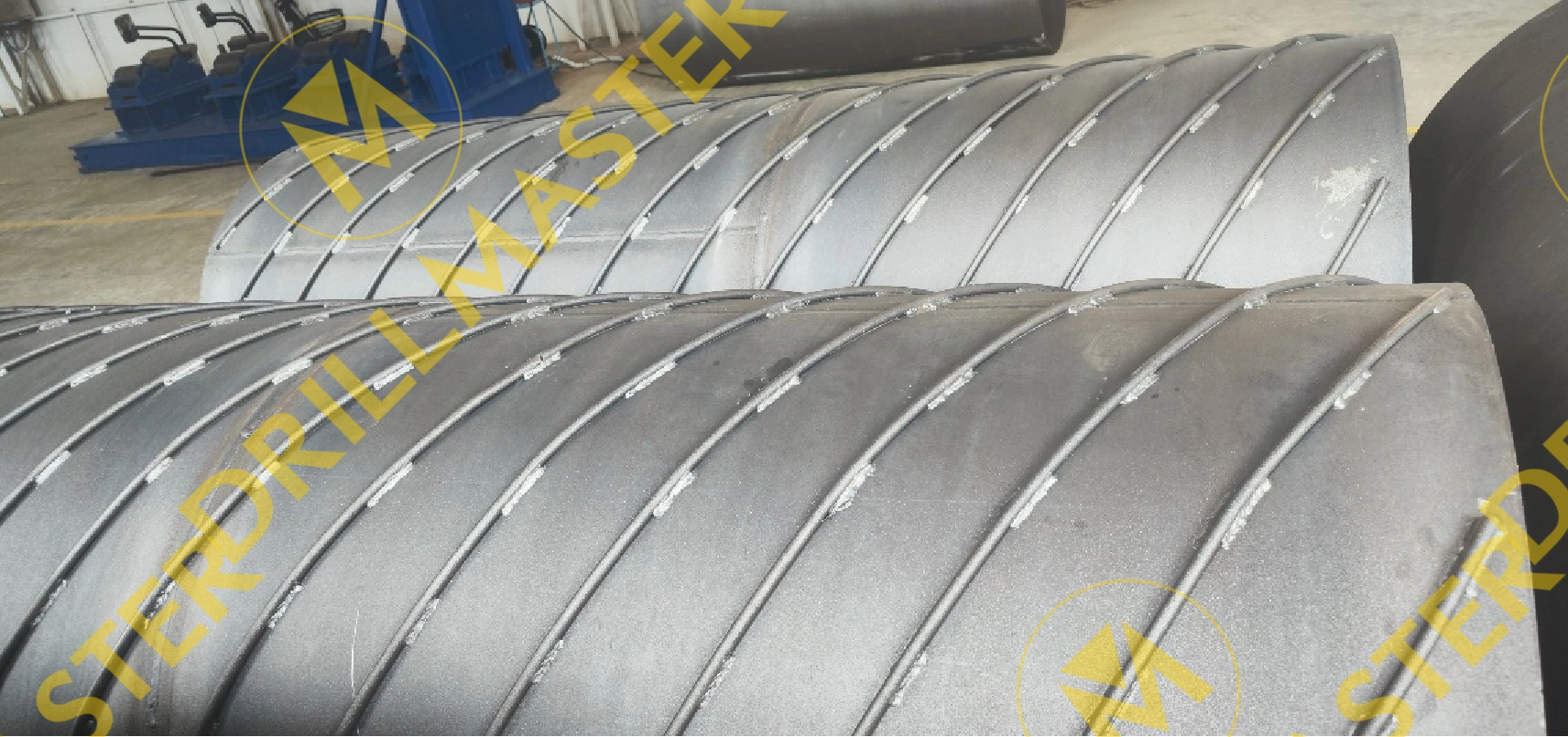
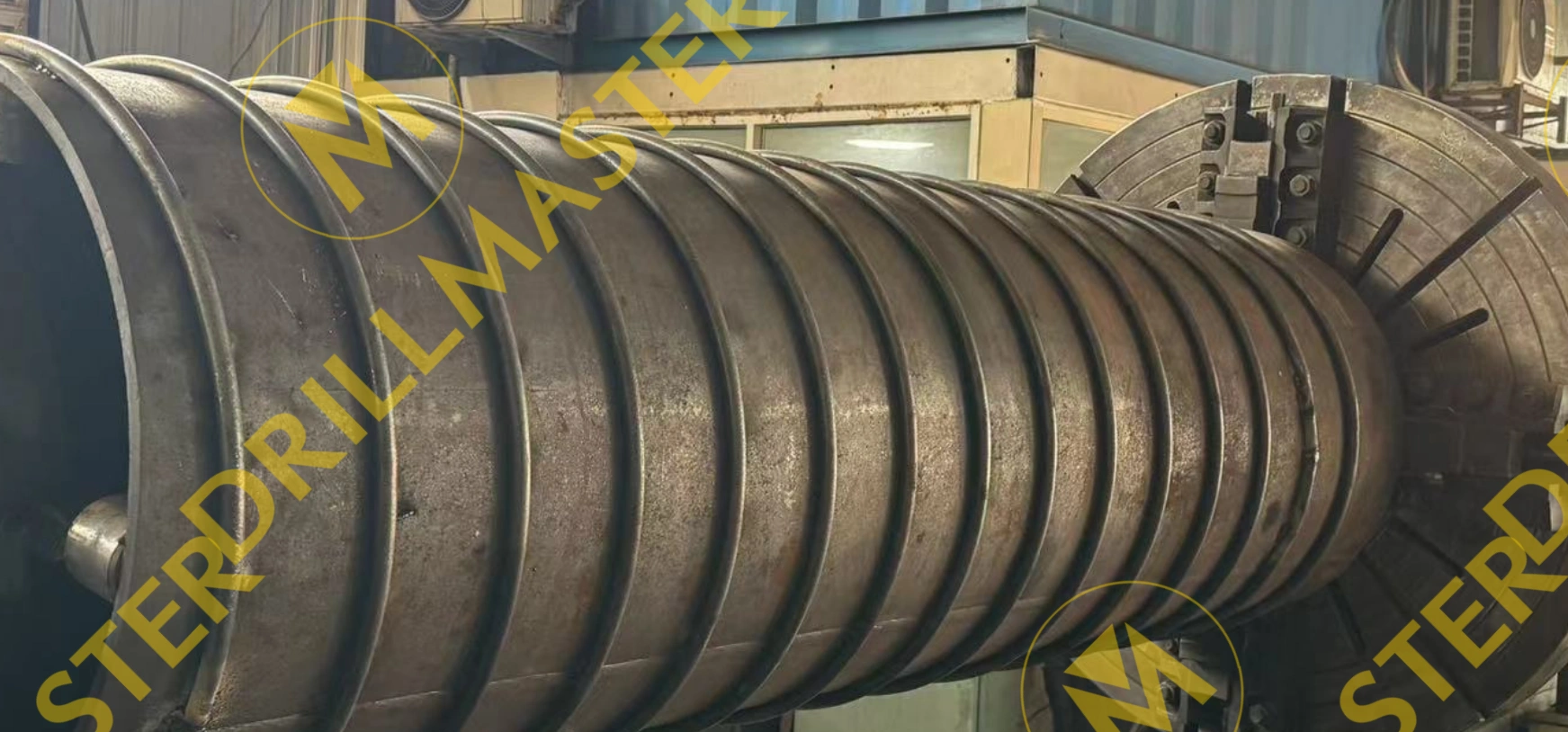
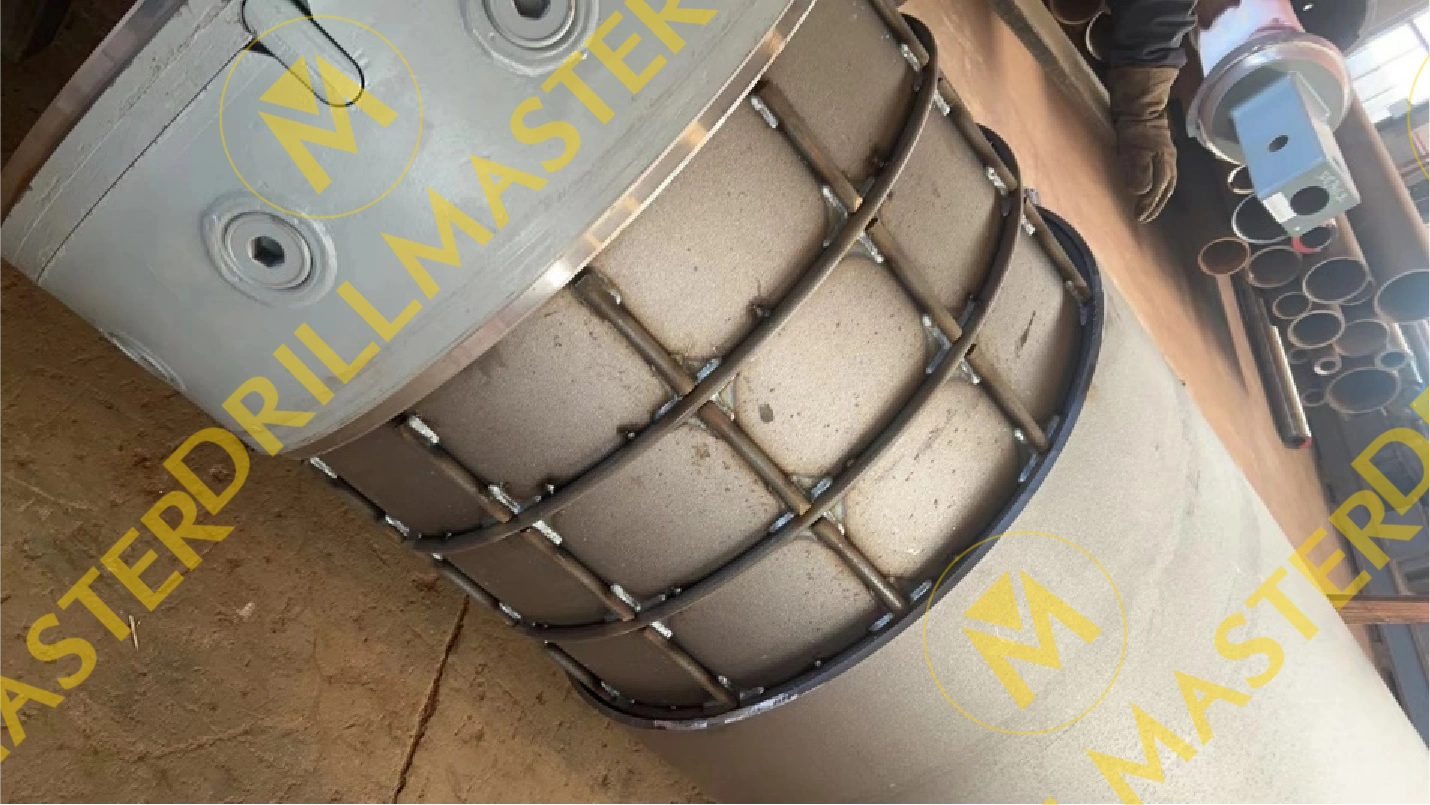
| Comparison | Multi-Rib Spiral | Square-Rib Circular | Single-Rib Spiral |
| Structural Design | Multiple spiral ribs or reinforcing ribs arranged between the inner and outer walls | Square-section reinforcing ribs arranged circumferentially or spirally, depending on the manufacturer's design | A single continuous spiral rib connecting the inner and outer walls |
| Main Features | More ribs and more support points | Regular rib cross-section and relatively rigid connections | Relatively simple structure with continuous spiral reinforcement |
| Stiffness and Deformation Resistance | Generally high, depending on rib height, thickness, and spacing | Square rib sections can improve local support stiffness | Depends on rib dimensions, pitch, and welding quality |
| Torsional Resistance | Multiple ribs can improve overall torsional stiffness | Depends on the connection between the square ribs and the two walls | Continuous spiral reinforcement can transfer torque, subject to design parameters |
| Weight and Cost | Generally higher steel consumption and welding requirements | Depends on rib dimensions and arrangement | Relatively simple structure with potential for lower manufacturing cost |
| Typical Applications | Large-diameter, deep-pile, and high-load construction | Applications requiring local support and structural stiffness | General construction loads where weight and cost are important considerations |
Key Differences: Multi-rib spiral structures emphasize multiple support points and overall reinforcement; square-rib circular structures focus on rib cross-section and connection design; single-rib spiral structures provide continuous reinforcement through a relatively simplified design.
However, torsional resistance cannot be determined by the structural name alone. The performance of double-wall casing also depends on thethickness of the inner and outer walls, rib height and thickness, spiral pitch, weld quality, and casing joint design.
Double-wall casing must be capable of transferring torque, axial compression, and extraction forces generated by the piling equipment.
1) Multi-Rib Spiral
This structure is suitable for applications where overall casing stiffness and deformation resistance are key considerations, such as:
• Large-diameter and deep-pile construction.
• Casing installation involving high torque or rotary pressing.
• Complex ground conditions with significant lateral earth pressure.
• Applications requiring high extraction forces and repeated casing use.
Its main advantage is enhanced structural reinforcement. However, casing weight, manufacturing cost, and the welding quality between the ribs and the inner and outer walls should also be considered.
2) Square-Rib Circular
If "square-rib circular" refers to double-wall casing with square-section reinforcing ribs arranged circumferentially or spirally, its potential advantages include a regular rib cross-section and good local support capacity.
Key factors to consider include:
• Square rib dimensions and spacing.
• Welded connections between the ribs and the inner and outer walls.
• Uniformity of support between the two walls.
• Local stress concentration under torsional loads.
Whether this structure is superior to a multi-rib spiral design cannot be determined by cross-sectional shape alone. The number of ribs, effective cross-sectional area, and overall structural design must also be compared.
3) Single-Rib Spiral
This structure typically uses one continuous spiral rib to connect the inner and outer walls, resulting in a relatively simple design.
Potential advantages include:
• Simple structure and relatively straightforward manufacturing.
• Potential to reduce casing weight and manufacturing cost.
• A continuous spiral connection that provides a load-transfer path.
However, if the rib cross-section is too small, the spiral pitch is too large, or the welding quality is insufficient, local deformation or stress concentration at the connections may occur under high torque and axial loads.
| Parameter | Impact on Construction Performance |
| Inner and Outer Wall Thickness | Determines resistance to compression, bending, and local deformation |
| Rib Cross-Sectional Area | Affects support between the walls and load transfer |
| Spiral Rib Spacing / Pitch | Influences support density and local deformation |
| Number of Reinforcing Ribs | Affects structural arrangement and load distribution |
| Weld Design and Quality | Determines the reliability of torque, compression, and extraction force transfer |
| Casing Joints | Affect torque and axial load transfer along the casing string |
| Casing Diameter and Length | Influence overall stiffness, weight, and construction loads |
• Large-diameter piles, deep piles, hard rock, or high-torque construction: Prioritize comparison of multi-rib spiral structures with higher reinforcement capacity.
• Applications requiring a balance between stiffness and structural regularity: Evaluate the rib cross-section, welding method, and support spacing of square-rib circular structures.
• General borehole support applications where weight and cost are important: Consider single-rib spiral structures, provided that the actual construction loads are properly calculated.These recommendations provide a structural basis for selection rather than a fixed performance ranking. In full casing construction, the casing must withstand various loads, including rotation, pressing, and extraction. The final selection should therefore be based on the structural drawings and load-bearing calculations for the specific casing model.
Contact Us