E-mail: [email protected] Whatsapp: +8613647327093 Tel: +86-731-8403-0163
E-mail: [email protected] Whatsapp: +8613647327093 Tel: +86-731-8403-0163
The performance of a pile breaker depends not only on proper equipment selection but also on correct operating procedures. If the operator fails to follow the equipment requirements and construction specifications, problems such as pile body damage, reinforcement deformation, inaccurate pile-cutting elevation, equipment failure, and even safety accidents may occur, even when the correct model has been selected.
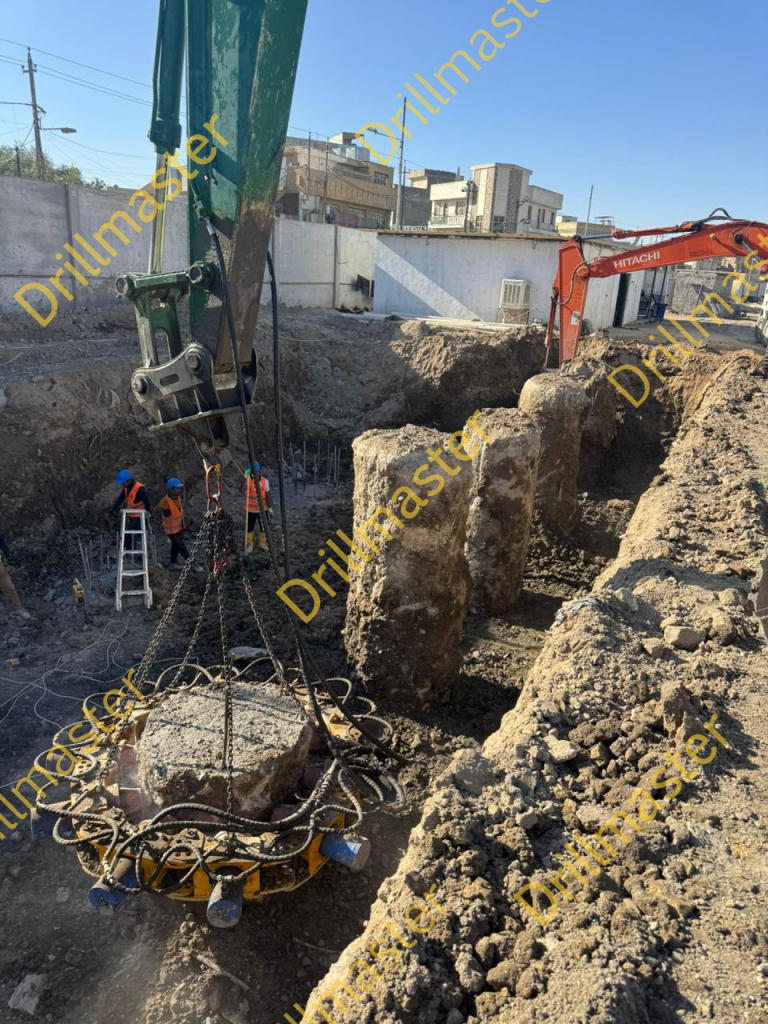
This is one of the most serious problems that can result from improper operation of a pile breaker. The primary purpose of pile breaking is to remove excess pile head concrete, not to damage the designed pile body.
The following operator errors may cause problems:
Setting the pile-breaking position too low.
Applying excessive hydraulic pressure.
Maintaining pressure continuously for too long.
Forcing the operation before the pile has reached an appropriate fracture condition.
These actions may cause cracks in the pile body, localized concrete damage, or even reinforcement damage, potentially affecting the integrity and load-bearing capacity of the pile foundation.
Therefore, the pile-breaking position and hydraulic pressure should be strictly controlled during operation to prevent excessive pressure from being applied to the designed pile body.
Cast-in-place piles are typically reinforced with steel cages. Improper operation of a pile breaker may also damage the main reinforcement or concrete cover.
Common operating mistakes include:
Directly pressing the main reinforcement with the hydraulic modules.
Applying force at an improper position.
Failing to control the direction of concrete fracture.
Forcibly pulling the pile head before it has completely fractured.
These actions may cause the main reinforcement to bend, damage the concrete cover, and even make subsequent pile cap or pile-to-cap connection work more difficult.
Therefore, during pile breaking, the equipment should apply force evenly along the designed breaking position, while unnecessary direct pressure on the reinforcement should be avoided.
The pile-cutting elevation directly affects subsequent pile cap and foundation construction. If the operator fails to accurately control the cutting elevation, equipment levelness, and breaking depth, several problems may occur:
The remaining pile head is too high and requires secondary treatment.
The pile top is below the designed elevation and requires remedial measures.
The cutting height in a single operation is too large and exceeds the load capacity of the pile breaker, potentially bending the hydraulic cylinder piston rod and damaging the machine.
The pile top is uneven, increasing the difficulty of subsequent construction.
Therefore, the design elevation should be confirmed before construction. During operation, the equipment should remain stable, and the pile-breaking position should be carefully controlled to meet the required elevation as accurately as possible and minimize rework.
Improper operation can affect not only pile quality but also the service life of the pile breaker.
Long periods of operating under pressure or applying excessive pressure may cause the hydraulic oil temperature to rise, accelerating wear of the hydraulic system and seals.
Forcing the equipment to process piles beyond its rated capacity may subject components such as hydraulic cylinders and pins to excessive loads. In severe cases, this may result in hydraulic cylinder damage, premature seal wear, or deformed pins.
In addition, failure to inspect the equipment's connections before operation may result in:
Loose bolts.
Hydraulic hose leakage or even rupture.
Abnormal connection or detachment of pile-breaking modules.
Therefore, before each operation, the hydraulic hoses, cylinders, pins, bolts, and module connections should be inspected to ensure that the equipment is in proper working condition.
Pile breaking involves considerable hydraulic pressure and concrete breaking forces. Improper operation can therefore create significant safety hazards on the job site.
For example:
Broken concrete fragments may fly outward.
Hydraulic oil may leak.
The equipment may swing or move abnormally.
The excavator or pile breaker may become unstable.
Operators or other personnel may be injured.
Safety risks are generally higher when working in deep excavations, confined construction areas, or pile foundations with densely arranged reinforcement.
Therefore, operators should follow the equipment operating procedures and keep unauthorized personnel away from the working area. The equipment condition and site environment should also be inspected before starting work.
Overall, the key to proper pile breaker operation is to control hydraulic pressure appropriately, accurately control the pile-breaking position, avoid damaging the reinforcement and pile body, and conduct thorough equipment and site safety inspections. Only when both equipment selection and operating procedures are correct can efficient and safe pile-breaking construction be achieved.
To prevent improper operation from affecting construction efficiency and pile head quality, pay particular attention to the following points when using a pile breaker:
① Keep the Equipment Level and Correctly Position It on the Pile Head
Before operation, make sure that the pile breaker is properly aligned with the pile and kept as level as possible. This allows the hydraulic modules to apply force evenly and prevents excessive localized pressure caused by tilting.
② Apply Hydraulic Pressure Gradually According to the Operating Requirements
Do not apply maximum pressure immediately. Increase the hydraulic pressure gradually according to the equipment operating requirements, allowing cracks to form along the predetermined breaking position and eventually fracture the pile head.
③ Avoid Directly Pressing the Main Reinforcement
During operation, properly control the equipment height and force application position. Avoid allowing the hydraulic modules to directly press against the main reinforcement whenever possible, reducing the risk of reinforcement deformation and damage to the concrete cover.
④ Do Not Exceed the Rated Capacity of the Equipment
When dealing with oversized piles, high-strength concrete, or densely reinforced piles, use equipment with an appropriate capacity rather than attempting to compensate by continuously increasing pressure or forcing the machine to operate beyond its limits.
⑤ Regularly Inspect the Hydraulic System and Connections
Before and after operation, inspect the hydraulic hoses, cylinders, pins, bolts, and pile-breaking modules. Any leakage, looseness, abnormal wear, or other defects should be addressed promptly.
⑥ Inspect the Pile Head Quality After Breaking
After pile breaking is completed, check the pile-top elevation, flatness, concrete integrity, and reinforcement condition. If the pile top is too high, too low, uneven, or shows abnormal cracking, appropriate corrective measures should be taken promptly.
Contact Us