E-mail: [email protected] Whatsapp: +8613647327093 Tel: +86-731-8403-0163
E-mail: [email protected] Whatsapp: +8613647327093 Tel: +86-731-8403-0163
A belling bucket is a specialized drilling tool used for pile foundation construction. It is mainly installed on rotary drilling rigs or other drilling equipment to enlarge the diameter at the bottom of a bored pile hole, forming an underreamed pile or a bell-shaped base. This enlarged base increases the bearing capacity and improves the stability of the pile foundation.
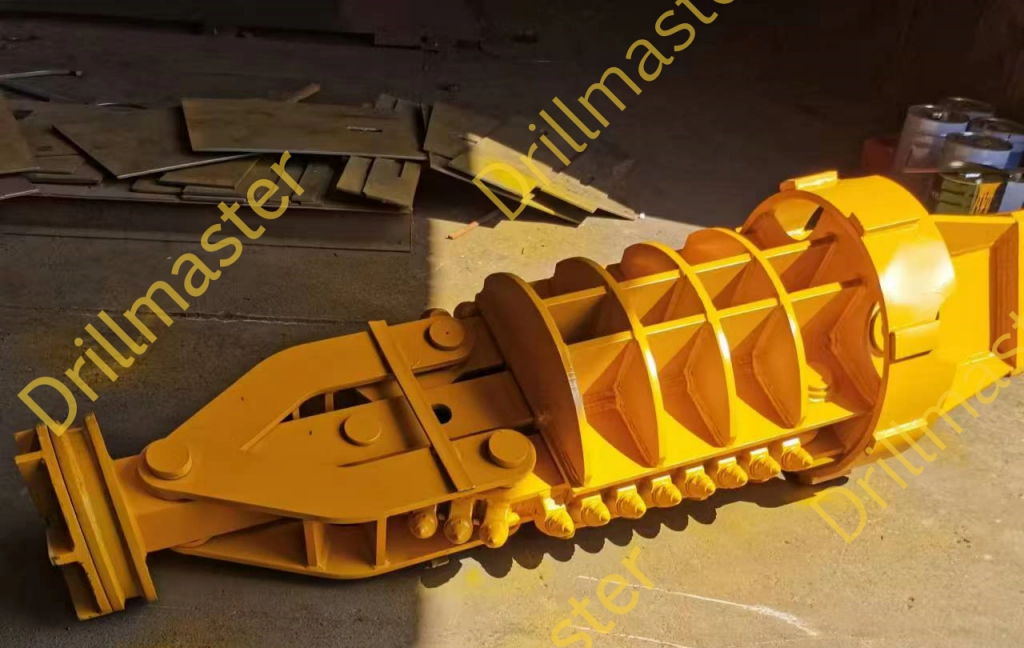
The working process of a belling bucket generally includes the following steps:
1. Lowering the Drill Tool to the Bottom of the Hole
The belling bucket is lowered into the pre-drilled pile hole until it reaches the designed depth.
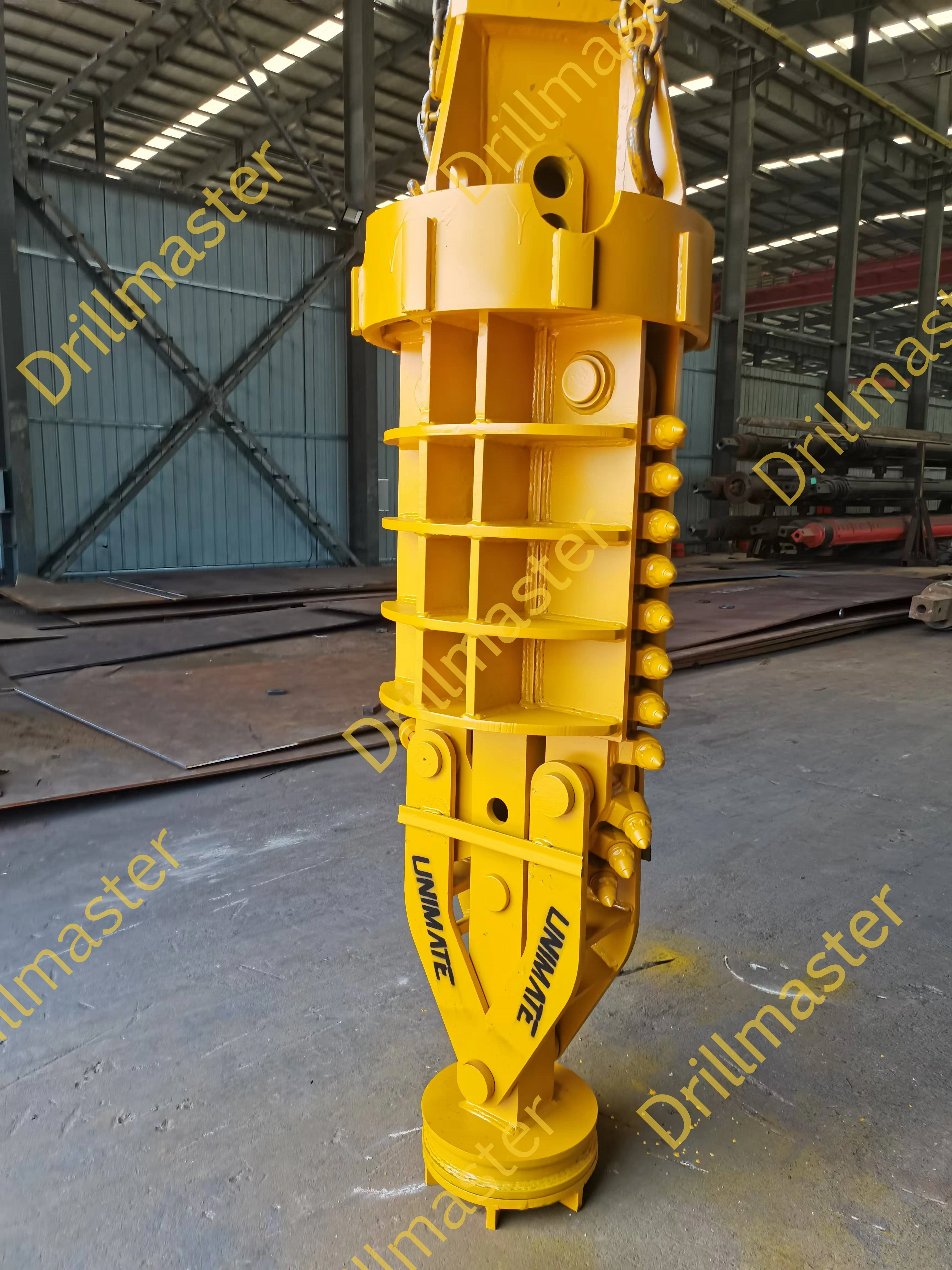
2. Expanding the Cutting Mechanism
After reaching the bottom of the hole, the cutting wings of the belling bucket expand outward through a mechanical or hydraulic mechanism.
3. Cutting and Enlarging the Pile Base
The drill rotates and cuts the surrounding soil at the pile bottom, enlarging the base diameter to the designed size and forming a bell-shaped or spherical enlarged end.
4. Retracting the Wings and Removing the Drill
After the underreaming process is completed, the cutting wings automatically retract, allowing the drilling tool to be safely lifted out of the borehole.
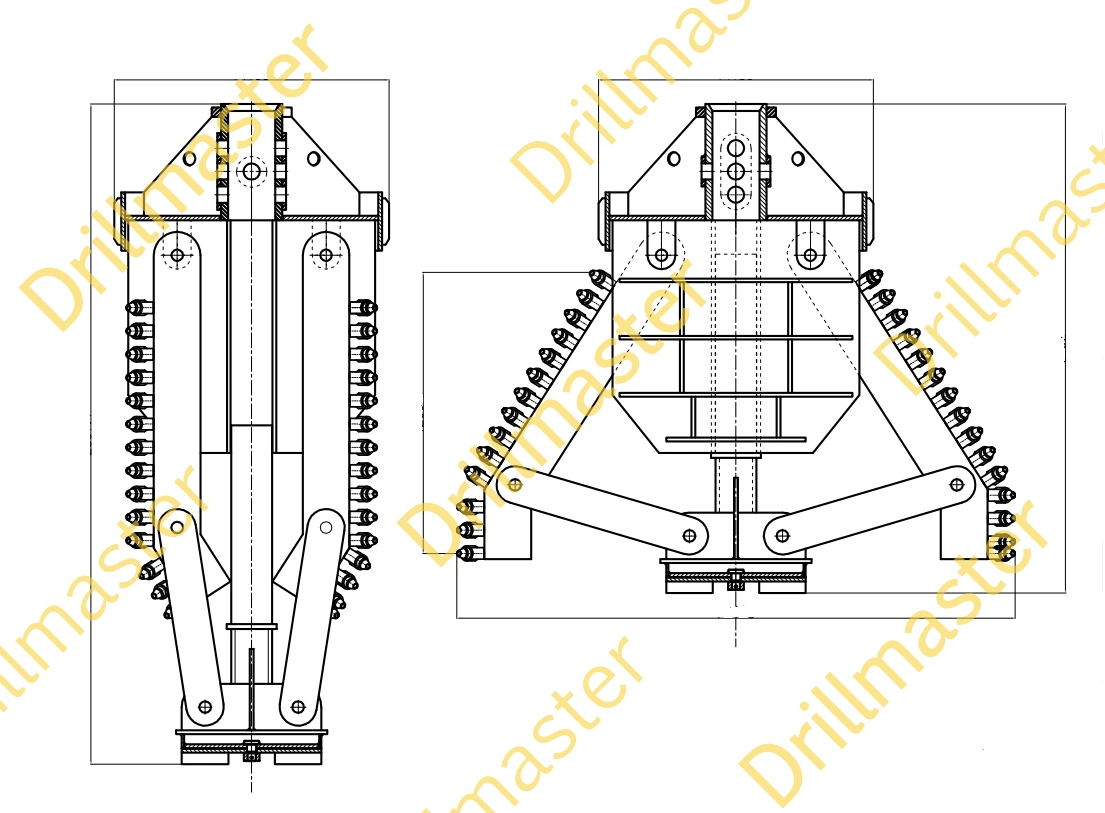
1. Drill Body
The drill body connects with the drill rod and transfers torque from the drilling rig to the cutting mechanism.
2. Expanding Wings
The expanding wings are responsible for cutting and enlarging the pile base to create the underreamed section.
3. Expansion Mechanism
The expansion mechanism can be mechanical or hydraulic and controls the opening and retraction of the cutting wings.
4. Cutting Teeth
Different types of wear-resistant cutting teeth can be selected according to various geological conditions to improve drilling efficiency and durability.
5. Guiding Device
The guiding system ensures stable operation of the drilling tool during the underreaming process and helps maintain the accuracy of the enlarged base.
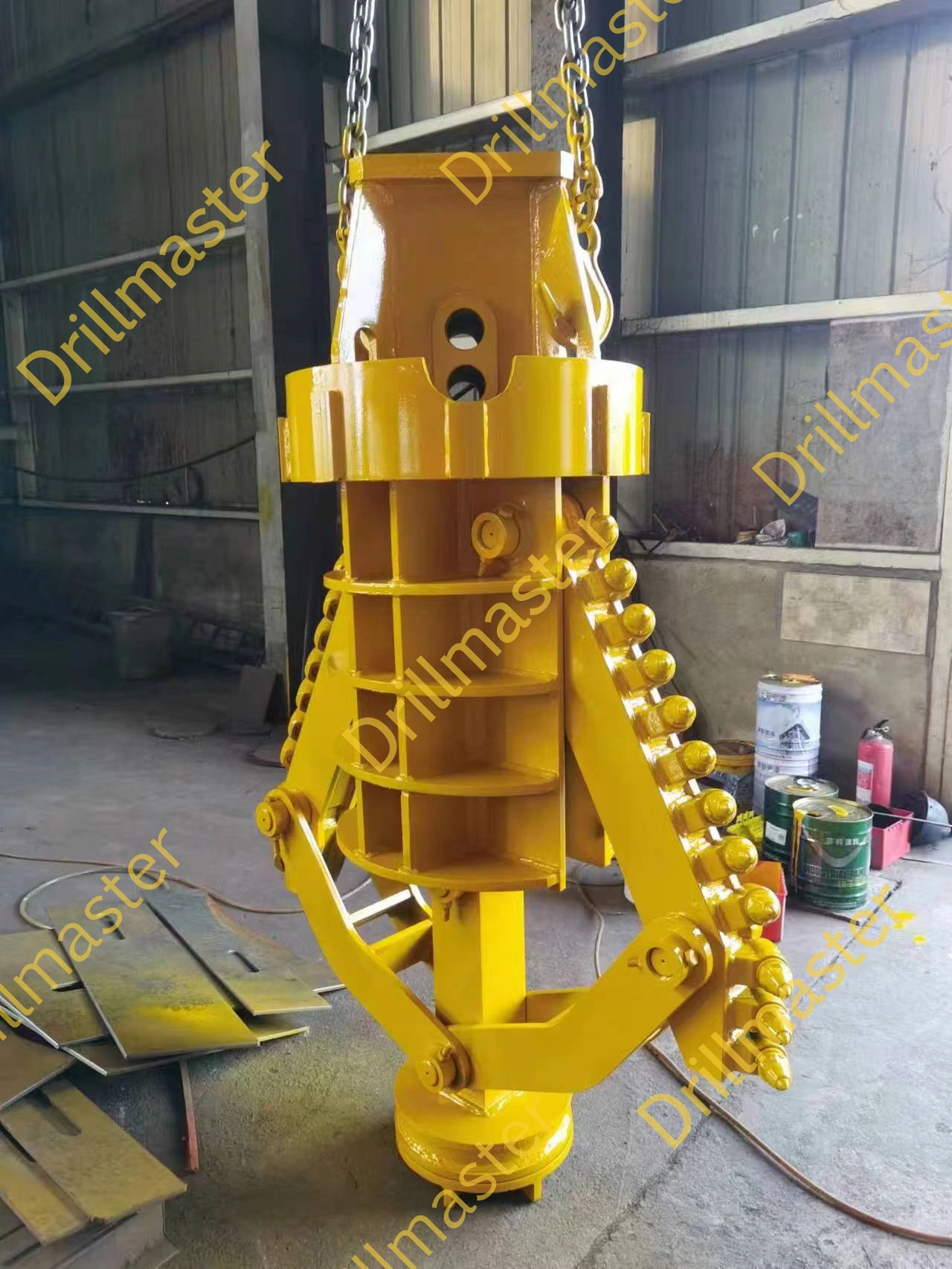
1. Increasing Single Pile Bearing Capacity
One of the biggest advantages of a belling bucket is its ability to significantly increase the bearing capacity of a single pile.
By enlarging the diameter of the pile base, the contact area between the pile tip and the bearing stratum is increased, allowing the pile to achieve higher end-bearing capacity. Meanwhile, the enlarged pile base improves the stress distribution of the pile body and enables loads to be transferred more evenly into the ground.
For heavy-load structures such as high-rise buildings, long-span bridges, heavy industrial plants, and large storage tank foundations, underreamed piles can meet higher design load requirements without simply increasing pile diameter or pile length.
2. Reducing Settlement and Improving Foundation Stability
An enlarged pile base can transfer building loads more effectively to stable bearing layers, reducing the stress concentration on the soil and lowering the risk of uneven foundation settlement.
For projects requiring high foundation stability, such as high-rise buildings, bridges, and transmission towers, underreamed piles can significantly improve settlement resistance and long-term structural stability. They also help reduce risks such as structural cracking and tilting caused by foundation deformation, improving overall project durability and safety.
Due to their ability to create enlarged pile bases and improve foundation performance, belling buckets are widely used in projects requiring high bearing capacity, stability, and cost efficiency.
1. High-Rise Buildings — Increasing Single Pile Capacity
In projects such as skyscrapers, large commercial complexes, residential buildings, and office towers, the structural weight and service loads are extremely high, requiring foundations with greater load-bearing capacity.
Belling buckets can create underreamed bored piles with enlarged pile bases, increasing the pile tip bearing area, improving single pile capacity, and reducing foundation settlement.
Typical applications:
High-rise residential buildings
Commercial complexes
Hotels
Office buildings
Hospitals
2. Bridge Foundations — Improving Foundation Stability
Bridge piers and abutments usually withstand significant vertical and horizontal loads, requiring extremely reliable foundation systems.
Belling buckets can construct high-capacity underreamed piles, allowing each pile to support greater loads. The enlarged pile base also improves overall bridge foundation stability and settlement resistance, making them especially suitable for large bridge projects.
Typical applications:
Highway bridges
Railway bridges
Urban viaducts
Sea-crossing bridges
3. Transmission Tower Foundations — Improving Uplift Resistance
Transmission towers, communication towers, and wind turbine foundations must withstand not only vertical loads but also uplift forces and overturning moments caused by wind loads.
Because underreamed piles have an enlarged base structure, they provide stronger anchoring between the pile and surrounding soil, improving uplift resistance and overturning resistance. This enhances the long-term safety and stability of tower structures.
Typical applications:
High-voltage transmission lines
Ultra-high-voltage transmission towers
Communication towers
Wind turbine foundations
4. Metro and Underground Construction — Suitable for Complex Ground Conditions
Metro stations, underground utility corridors, and underground development projects often encounter complex geological conditions, creating higher requirements for foundation construction.
Under suitable stable ground conditions, belling buckets can increase foundation bearing capacity and effectively control settlement of underground structures. Combined with slurry wall protection or casing systems, underreaming technology can also be applied in some challenging geological environments.
Typical applications:
Metro stations
Underground parking facilities
Utility tunnels
Underground commercial spaces
5. Industrial Plants — Supporting Heavy Equipment Foundations
Large industrial plants often contain heavy machinery, such as presses, rolling mills, power generation equipment, and large cranes. These facilities generate both continuous and dynamic loads.
Underreamed piles constructed with belling buckets provide high bearing capacity and excellent settlement resistance, creating more stable foundations for heavy equipment and reducing vibration or displacement caused by foundation settlement during operation.
Typical applications:
Steel plants
Power plants
Cement plants
Manufacturing facilities
Large logistics centers
6. Petrochemical Projects — Large Storage Tanks and Heavy Structures
Large oil storage tanks, LNG tanks, processing towers, and pipe racks in petrochemical projects usually create significant concentrated loads and require highly stable foundations.
Underreamed piles can increase single pile capacity, reduce long-term settlement risks, and provide safe and reliable foundation support for large-scale petrochemical facilities.
Typical applications:
Oil storage tanks
LNG storage tanks
Chemical processing equipment
Petrochemical pipe racks
Energy facilities
Belling buckets are not suitable for all geological conditions. The best performance is usually achieved in formations with good borehole stability.
Only when the surrounding soil remains stable during the underreaming process can a properly formed enlarged base be created and the quality of the pile foundation be ensured.
1. Clay
Clay is one of the most suitable ground conditions for underreaming construction.
Due to its good cohesion and borehole stability, clay is less likely to collapse during the enlargement process, allowing a well-shaped underreamed base to be formed with better construction quality control.
2. Silty Clay
Silty clay has certain cohesion and stability, making it suitable for underreaming operations when groundwater influence is limited.
During construction, drilling speed and underreaming time should be properly controlled according to groundwater conditions and soil moisture content to ensure the quality of the enlarged base.
3. Silt
Dense or medium-dense silt can be suitable for underreaming construction. However, since silt is less stable than clay, slurry protection or other stabilization methods may be required to prevent local borehole collapse during the enlargement process.
4. Medium-Dense Sand
Medium-dense sand can be suitable for underreaming when groundwater influence is limited and the sand layer has sufficient density.
However, because sand has low cohesion, construction usually requires high-quality slurry or casing systems to maintain borehole stability.
5. Strongly Weathered Rock
For relatively intact strongly weathered rock formations, belling buckets can cut and form stable enlarged bases while utilizing the high bearing capacity of the rock layer.
During construction, wear-resistant cutting teeth or rock cutting tools should be selected according to rock strength to improve drilling efficiency and reduce tool wear.
Loose sand layers: Borehole collapse may occur, making it difficult to form a complete enlarged base.
Saturated quicksand layers: High groundwater pressure increases construction risks.
Thick gravel and boulder layers: Expansion of cutting wings may become difficult, and cutting tool wear can increase significantly.
Hard intact rock: High rock strength reduces underreaming efficiency and increases construction costs.
Belling buckets are widely used in high-rise buildings, bridges, transmission towers, metro projects, industrial plants, and petrochemical facilities where high foundation bearing capacity is required.
From a geological perspective, they are most suitable for clay, silty clay, medium-dense silt, medium-dense sand, and strongly weathered rock formations.
By selecting the appropriate construction method and considering specific ground conditions, underreaming technology can fully utilize the advantages of enlarged-base piles while improving construction quality, foundation performance, and overall project cost efficiency.
Contact Us