E-mail: [email protected] Whatsapp: +8613647327093 Tel: +86-731-8403-0163
E-mail: [email protected] Whatsapp: +8613647327093 Tel: +86-731-8403-0163
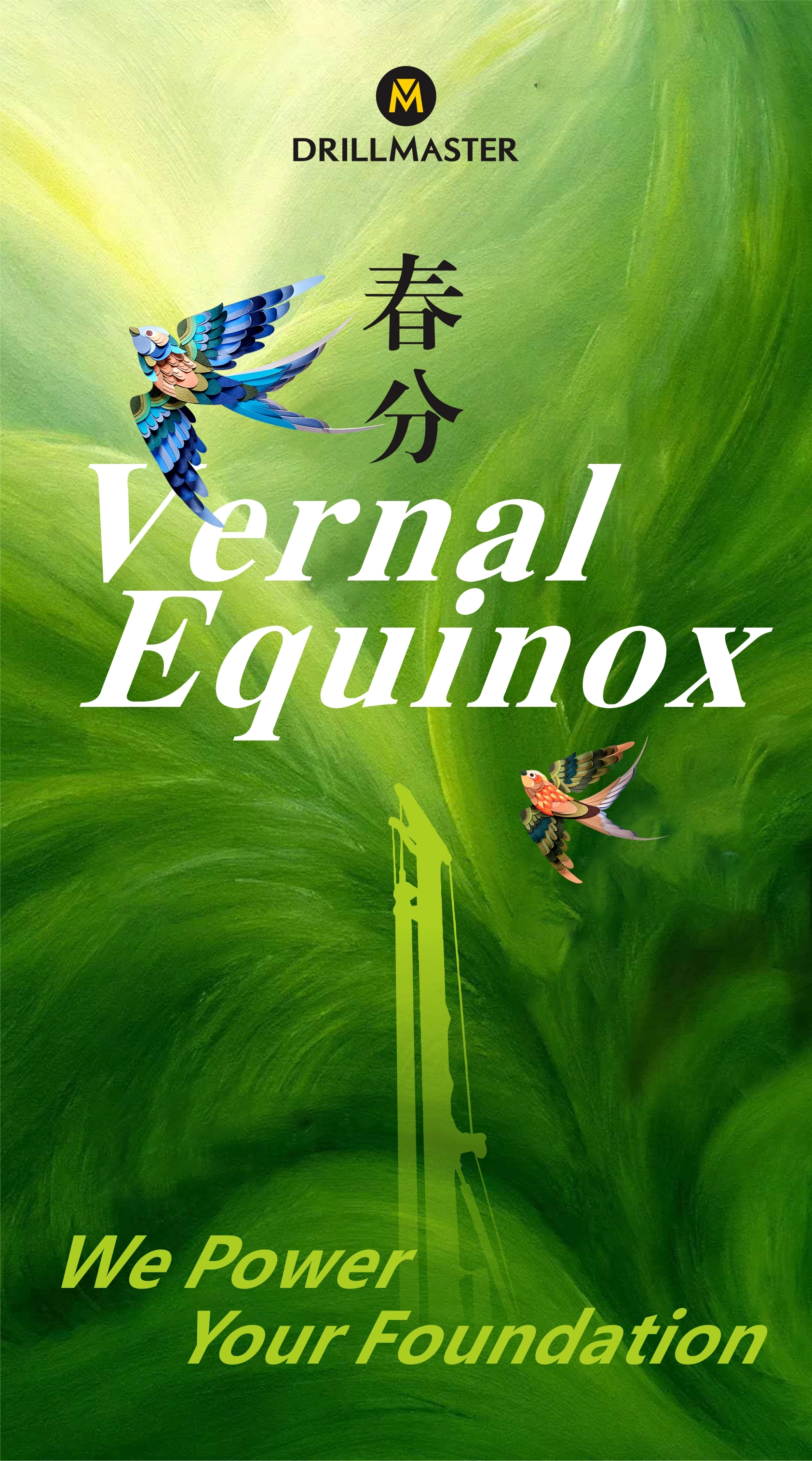
The Vernal Equinox is the fourth solar term in the traditional Chinese 24 solar terms, usually falling on March 20 or 21. It has the following key meanings:
Equal Day and Night: On the Vernal Equinox, the sun shines directly on the equator, and day and night are almost equal in length (12 hours each) everywhere on Earth (except at the poles). The ancient saying, "At the Vernal Equinox and Autumn Equinox, day and night are equally divided," refers to this phenomenon.
Midpoint of Spring: According to the solar terms, spring runs from the Beginning of Spring (Lichun) to the Beginning of Summer (Lixia). The Vernal Equinox falls exactly in the middle of this period, dividing spring into two equal halves—hence the name "Vernal Equinox."
Climate Characteristics: After the Vernal Equinox, the sun's direct rays move northward. In the Northern Hemisphere, days become longer than nights, temperatures rise more rapidly, and rainfall increases. Most parts of China enter a bright, warm spring, winter crops enter their growing phase, and agricultural activities become busy.
It is not only the astronomical "midpoint" but also carries profound historical and cultural meaning. Below, I will discuss its origin and the legends associated with it.
The origin of the Vernal Equinox is closely tied to ancient observations of astronomy, the needs of agricultural production, and the philosophy of yin and yang.
1. Astronomical Roots: From "Daytime Equinox" to "Vernal Equinox"
The earliest records of the Vernal Equinox date back to the pre-Qin period. In the Book of Documents (Shangshu), there is a passage: "At the vernal equinox, the sun is due south; by observing the Bird constellation at night, one can regulate mid-spring." Here, "daytime equinox" refers to the Vernal Equinox (when day and night are equal in length). By observing the "Bird" constellation (the southern Vermilion Bird suite) appearing due south at night, the ancients determined the mid-spring season.
The term "Vernal Equinox" (Chunfen) first appeared in Master Lü's Spring and Autumn Annals (Lüshi Chunqiu) in the section on the twelve months. A clear explanation was later given in Han dynasty texts:
Collected Explanations of the Lunar Mansions and Phenomena (Yueling Qishu Jijie): "In the second lunar month, fen means half. This day lies at the midpoint of the ninety days of spring, hence it is called fen."
Luxuriant Dew of the Spring and Autumn Annals (Chunqiu Fanlu): "At the Vernal Equinox, yin and yang are equally matched; therefore day and night are equal, and cold and heat are balanced."
2. Establishment in the Calendar
As early as the Spring and Autumn and Warring States periods, the ancients used a gnomon (a precursor to the sundial) to measure shadow lengths, establishing the four cardinal solar terms (Vernal Equinox, Autumn Equinox, Summer Solstice, Winter Solstice). By the reign of Emperor Wu of the Han dynasty (104 BCE), when Luoxia Hong and others formulated the Taichu Calendar, the 24 solar terms were formally incorporated into the calendar system, and the Vernal Equinox was fixed as one of the most important nodes.
Among the people, many myths and interesting tales surround the Vernal Equinox. Two of the most representative are the following:
Legend 1: Emperor Yan Seeks the Sun
According to folklore, the Vernal Equinox is linked to the ancient tribal leader Emperor Yan (Yandi).
It is said that long ago, people suffered from hunger and cold. Emperor Yan prayed to Heaven for a bountiful harvest. Heaven told him that the sun had hidden itself to sleep; if he could bring the sun back, warmth and abundance would return to the world.
Riding a five-colored bird, Emperor Yan overcame numerous hardships and finally reached Penglai, the mythical mountain of immortality. On the day of the Vernal Equinox, he found the sun deep in slumber. He awakened it, tied it to the bird's back with a rope, and brought it back to the world.
With the sun's return, the earth warmed, plants flourished, and people lived happily ever after. To commemorate Emperor Yan and welcome the Vernal Equinox, the custom of "offering sacrifices to the sun on Vernal Equinox" gradually emerged. In ancient times, the emperor would lead his officials to the Sun Altar on this day to honor the sun deity—a tradition that continued through the Ming and Qing dynasties (the Sun Altar Park in Beijing remains as a historical site).
Legend 2: The Fun of Egg Balancing
"At the Vernal Equinox, eggs stand fine" is a widely known saying.
Legend has it that on the day of the Vernal Equinox, the Earth's axis and the plane of its orbit around the sun are in a state of relative gravitational balance, making it easier to balance an egg upright.
This custom is believed to have originated in China over 4,000 years ago as a celebration of the arrival of spring. The ancients thought that successfully standing an egg on end during the Vernal Equinox would bring good fortune, thriving descendants, and vigorous growth throughout the year. While modern science shows that eggs can theoretically be balanced any day with enough patience, the practice of egg balancing on Vernal Equinox has become a fun "global game" enjoyed by Chinese communities and people worldwide.
Beyond its origins and stories, the Vernal Equinox holds several layers of cultural meaning:
Midpoint of Spring: In ancient times, spring was considered to last from the Start of Spring (Lichun) to the Start of Summer (Lixia). The Vernal Equinox falls exactly at the midpoint of the three months of spring, thus "halving" the season.
Balance of Yin and Yang: As stated in Luxuriant Dew of the Spring and Autumn Annals, the Vernal Equinox is the moment when yin and yang are equally matched. The ancients believed that the qi (energy) of heaven and earth was most harmonious at this time. Therefore, in health preservation they emphasized "harmonization," and in conduct they stressed "moderation and uprightness."
Flower Messengers: During the Vernal Equinox, the ancients identified three "flower messengers" corresponding to the three pentads of the solar term: first the crabapple, then the pear blossom, and finally the magnolia. These three flowers bloom in succession around the Vernal Equinox, marking the peak of spring's splendor.
In summary, the Vernal Equinox originated from ancient astronomical observations and agricultural needs, embodying the philosophy of "unity of heaven and humanity." The legends associated with it—whether the heroic tale of Emperor Yan bringing back the sun or the cheerful custom of egg balancing—reflect the Chinese people's enduring hopes for sunlight, warmth, balance, and a bountiful harvest.
Contact Us