E-mail: [email protected] Whatsapp: +8613647327093 Tel: +86-731-8403-0163
E-mail: [email protected] Whatsapp: +8613647327093 Tel: +86-731-8403-0163
In foundation construction, rotary drilling rigs typically require sufficient vertical clearance to perform operations such as Kelly bar extension and retraction, drilling tool installation, drilling, and tool extraction. However, not all construction sites provide ideal working conditions. In locations such as building interiors, basements, areas beneath bridges, and underground construction sites, the working area is often restricted by structural elements, overhead obstacles, or existing infrastructure. As a result, conventional rotary drilling rigs and standard Kelly bars may not have enough room to extend or operate properly.
With the increasing number of urban infrastructure projects, existing building renovations, and underground space development projects, contractors are facing growing demand for foundation drilling under restricted headroom conditions. In these situations, completing drilling operations without modifying existing structures or expanding the available working space has become an important consideration in equipment selection and construction planning.
Low Headroom Drilling is a solution developed specifically for these challenging working environments. It focuses on using compact drilling rig configurations, low headroom Kelly bars, and compatible drilling tools to complete the required drilling operations within limited vertical clearance.
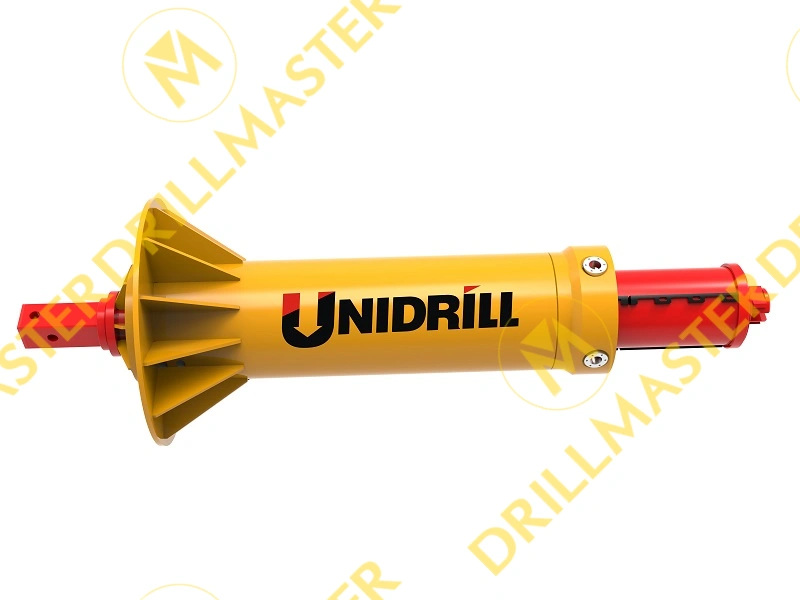
A Low Headroom Kelly Bar is a specially designed rotary drilling Kelly bar intended for construction sites with limited vertical clearance. Its main design objective is to minimize the overall retracted height and structural dimensions while maintaining the required drilling depth and power transmission capacity. It is typically used with a Low Headroom Rotary Drilling Rig, allowing drilling operations to be carried out in areas where conventional rotary drilling rigs cannot easily enter or fully extend.
Low Headroom Kelly Bar Is More Than Just a Shortened Standard Kelly Bar
A low headroom Kelly bar is not simply a standard Kelly bar with a shorter length. Although it may look similar to a conventional rotary drilling Kelly bar, its design involves more than just reducing the length of each section. Simply shortening the Kelly bar may reduce its retracted height, but it can also affect drilling depth, effective extension length, and compatibility with the rotary drive.
A Kelly bar designed for low headroom applications must take several factors into consideration:
| Design Factor | Key Considerations |
| Overall Retracted Height | Whether the total height in the fully retracted position meets the site's headroom requirements |
| Kelly Bar Sections | Whether the number of sections and the length of each section are properly configured |
| Telescopic Overlap | Whether sufficient overlap is maintained between individual Kelly bar sections |
| Effective Drilling Length | Whether the fully extended Kelly bar can achieve the required drilling depth |
| Torque Capacity | Whether the Kelly bar can withstand the torque required for drilling |
| Rig Compatibility | Whether it matches the rotary drive, hoisting system, and rig connections |
| Drilling Tool Connection | Whether it can be connected to the required drilling buckets and other tools |
Therefore, designing a low headroom Kelly bar involves finding the right balance between retracted height, effective drilling depth, torque capacity, and equipment compatibility. This is why low headroom Kelly bars often need to be customized according to the specific rotary drilling rig model, available working height, and project requirements, rather than simply adopting standard Kelly bar dimensions.
3.1 Compact Structural Design
One of the most important design features of a low headroom Kelly bar is controlling its overall height in the fully retracted position. This allows it to operate in construction environments with limited vertical clearance, such as basements and areas beneath bridges.
1) Reduced Overall Retracted Length: The length and dimensions of each Kelly bar section are carefully configured to minimize the overall height when the Kelly bar is fully retracted.
2) Optimized Section Overlap: The overlap between individual sections is designed to make efficient use of the available space while maintaining structural stability and torque transmission capacity.
3) Optimized Overall Configuration: The retracted dimensions are adjusted according to the position of the rotary drive and the structure of the drilling rig, ensuring that the Kelly bar can be installed and operated within the available headroom.
A compact design does not simply mean shortening the Kelly bar as much as possible. Instead, it requires a balance between retracted height, effective extension length, and structural strength.
3.2 Multi-Section Telescopic Structure
Low headroom Kelly bars typically adopt a multi-section telescopic structure. Individual sections extend and retract relative to one another, allowing drilling operations to be carried out within restricted vertical spaces.
Based on their torque transmission mechanisms, common Kelly bar configurations include:
Friction Kelly Bar: Torque is primarily transmitted through friction between the individual Kelly bar sections. Its structure is relatively simple and suitable for conventional drilling conditions within its designed operating range.
Interlocking Kelly Bar: Torque is transmitted through a mechanical locking mechanism between the sections. This configuration is suitable for applications requiring higher torque transmission capacity.
For low headroom Kelly bars, the number of sections and the length of each section are particularly important. Increasing the number of sections can help reduce the overall retracted dimensions, but section overlap, structural strength, and manufacturing requirements must also be taken into account.
Therefore, the number of sections and individual section lengths should be properly determined according to the required drilling depth, available headroom, and rotary drilling rig specifications.
3.3 Torque Transmission and Locking Mechanism
A Kelly bar must reliably transmit the torque generated by the rotary drive to the drilling tool at its lower end. Therefore, the torque transmission structure is an essential part of low headroom Kelly bar design.
Conventional Kelly bars generally transmit torque through external drive keys and their corresponding mating structures. For interlocking Kelly bars, a dedicated locking mechanism is also required to establish a reliable mechanical connection between individual sections during operation.
The following factors should receive particular attention in low headroom Kelly bar design:
1) Drive Key Design: The dimensions, positioning, and mating clearances of the external drive keys must be properly designed to ensure stable torque transmission.
2) Locking Mechanism: The interlocking mechanism must engage and disengage reliably to prevent locking failures during drilling.
3) Torsional Strength: The Kelly bar's torsional strength should be determined according to the rated torque of the rotary drive and the actual resistance of the ground.
4) Wear Resistance: Wear on the drive keys, contact surfaces, and locking components should be considered to maintain structural reliability during long-term operation.
Even with a compact structural design, load-bearing capacity must not be overlooked. Both the retracted height and torque performance need to be achieved through proper structural engineering.
3.4 Customized Length and Connection Design
Because low headroom rotary drilling rigs differ in structural configuration, rotary drive stroke, and construction requirements, low headroom Kelly bars often need to be customized for specific equipment.
Customization mainly involves the following aspects:
1) Top Connection: The upper connection should be designed according to the configuration and dimensions of the rotary drive to ensure proper installation and compatibility with the power transmission system.
2) Bottom Connection: The lower connection should match the connection type of drilling buckets, augers, and other drilling tools.
3) Overall Length: The retracted height and fully extended length should be determined according to the available headroom and required drilling depth.
4) Section Configuration: The number of Kelly bar sections and the length of each section should be properly configured based on the rotary drive stroke and required drilling depth.
With a customized design, the Kelly bar can better adapt to different drilling rigs and construction environments, meeting project requirements for drilling depth, torque transmission, and operational efficiency within restricted spaces.
| Application | Construction Characteristics |
| Basement Construction | Limited vertical clearance inside buildings |
| Metro Projects | Restrictions imposed by underground spaces and existing structures |
| Bridge Foundation | Insufficient vertical clearance beneath bridges |
| Indoor Foundation Works | Foundation construction inside factories and buildings |
| Foundation Retrofitting | Pile foundation modification and reinforcement in existing buildings |
| Restricted Access Sites | Limited equipment access and working space |
In addition to these typical applications, low headroom drilling equipment may also be required around industrial facilities, in narrow construction areas, and at sites with complex overhead obstacles.
Such projects may involve not only limited vertical clearance but also narrow equipment access routes and insufficient operating space. Therefore, equipment selection should take into account not only the retracted dimensions of the Kelly bar but also the overall dimensions of the drilling rig, transportation conditions, and available working space on site.
4.7 Does a Low Headroom Kelly Bar Affect Drilling Depth and Efficiency?
In practice, using a low headroom Kelly bar does not necessarily mean that the drilling depth will be reduced or that construction efficiency will be compromised. Its actual performance mainly depends on the Kelly bar's structural design and how well it matches the rotary drilling rig.
With a properly configured number of sections, individual section lengths, and connection structures, it is possible to meet site headroom requirements while maintaining the required drilling depth and operational efficiency as much as possible.
When selecting a low headroom Kelly bar, the following five factors should be carefully evaluated.
5.1 Available Working Height
1) Measure the Available Height: Measure the actual vertical clearance from the ground to the overhead obstacles, including floor slabs, beams, and other structural elements.
2) Check the Retracted Height: Confirm the overall height of the Kelly bar in its fully retracted position to ensure that it meets the site's space restrictions.
3) Allow Sufficient Operating Space: In addition to the Kelly bar's height, sufficient space must be reserved for drilling tool installation, removal, and equipment operation.
It is important to note that the retracted height of the Kelly bar is not the same as the overall working height of the drilling rig. The rotary drive, drilling tools, and overall equipment configuration must also be considered during selection.
5.2 Required Drilling Depth
1) Determine the Required Drilling Depth: Establish the target drilling depth according to the project design.
2) Select the Number of Sections: Determine the appropriate number of Kelly bar sections based on the required drilling depth and available headroom.
3) Optimize Individual Section Lengths: Configure the length and overlap of each section to ensure sufficient extension and achieve the required drilling depth.
The effective working length of a Kelly bar does not depend solely on the combined length of its individual sections. Section overlap, rotary drive stroke, and the specific equipment configuration must also be considered. Therefore, the effective drilling length should be calculated and verified according to the actual drilling rig specifications.
5.3 Rotary Rig Specifications
A low headroom Kelly bar must be compatible with the rotary drilling rig's power transmission and hoisting systems.
The following specifications should be checked during selection:
1) Rotary Torque: Confirm the rated torque of the rotary drive and the torque required under actual drilling conditions to ensure that the Kelly bar has sufficient torsional strength.
2) Kelly Stroke: Check the effective stroke of the rotary drive, as it affects the working distance during each drilling cycle.
3) Lifting Capacity: Verify the maximum lifting capacity of the drilling rig to ensure that the Kelly bar and drilling tools can be safely lifted.
4) Connection Dimensions: Check the connection dimensions, interface type, and structural configuration of the rotary drive to ensure proper Kelly bar installation.
The Kelly bar's design parameters should match the actual performance of the drilling rig. This helps prevent situations where the rotary drive produces more torque than the Kelly bar can safely withstand, or where the Kelly bar configuration prevents the drilling rig from fully utilizing its capabilities.
5.4 Ground Conditions and Drilling Tools
Different ground conditions create different levels of drilling resistance. Therefore, geological conditions and drilling tool configurations should also be considered when selecting a low headroom Kelly bar.
1) Clay and Soft Soil: Conventional drilling buckets can generally be used for cutting and excavating clay and soft soil. Drilling efficiency and the lifting capacity required for the drilling tools should be considered.
2) Sand and Gravel: Sand and gravel formations may increase drilling resistance and place higher demands on the drilling tool structure and torque transmission capacity.
3) Hard Rock: Hard rock formations typically require rock drilling buckets, roller cone tools, or other specialized drilling tools, placing greater demands on the Kelly bar's torque capacity.
In addition, suitable drilling buckets, augers, or rock drilling tools should be selected according to the ground conditions. Their connection structures must also be compatible with the Kelly bar.
The Kelly bar's torque capacity should be matched to the rotary drive's output torque, drilling tool requirements, and actual ground resistance.
5.5 Kelly Bar Type and Connection Compatibility
Depending on the torque transmission mechanism and construction requirements, low headroom Kelly bars can adopt either friction-type or interlocking-type configurations. The selection should be based on ground conditions, drilling requirements, and drilling rig performance.
Friction Kelly Bar: A friction Kelly bar primarily transmits torque through friction between its individual sections. It is suitable for conventional drilling conditions within its designed operating range.
Interlocking Kelly Bar: An interlocking Kelly bar transmits torque through a mechanical locking mechanism, making it more suitable for applications requiring higher torque transmission capacity.
In addition to selecting the appropriate Kelly bar type, connection compatibility must also be verified:
1) Top Connection: The upper connection must match the rotary drive of the drilling rig.
2) Bottom Connection: The lower connection must be compatible with drilling buckets, augers, and other drilling tools.
3) Structural Compatibility: Confirm that the Kelly bar dimensions, connection types, and telescopic structure meet the equipment requirements.
If the Kelly bar connections do not match the rotary drive or drilling tools, installation difficulties, unstable power transmission, or construction interruptions may occur, even when all other specifications are suitable.
The following table summarizes common problems encountered on construction sites, their possible causes, and corresponding solutions.
| Common Problems | Possible Causes | Suggested Solutions |
| The retracted Kelly bar is still too tall | Improper structural dimensions or configuration | Reconfigure the number of sections and optimize the retracted length |
| Insufficient actual drilling depth | Inadequate effective working length | Optimize individual section lengths and the overall Kelly bar configuration |
| Unstable torque transmission | Improperly matched locking mechanism or drive keys | Inspect the structural configuration and verify torque compatibility |
| Difficulty extending or retracting the Kelly bar | Abnormal section clearances or guide structures | Inspect for wear, deformation, and improper fitting clearances |
| Low drilling efficiency | Mismatch between the rotary drive stroke and Kelly bar configuration | Optimize the overall configuration of the drilling rig and Kelly bar |
Proper Kelly bar design is essential for successful low headroom drilling. With over 17 years of experience in the foundation engineering industry, Drillmaster specializes in manufacturing large Kelly bars for oversized and deep rotary bored piles, while also providing customized low headroom drilling solutions for projects with restricted working space.
Whether you are working on deep foundation projects or drilling in areas with limited vertical clearance, we can help you find a suitable Kelly bar solution based on your equipment specifications and project requirements.
Contact us to discuss your low headroom drilling requirements and explore a customized Kelly bar solution for your project.
Contact Us