E-mail: [email protected] Whatsapp: +8613647327093 Tel: +86-731-8403-0163
E-mail: [email protected] Whatsapp: +8613647327093 Tel: +86-731-8403-0163
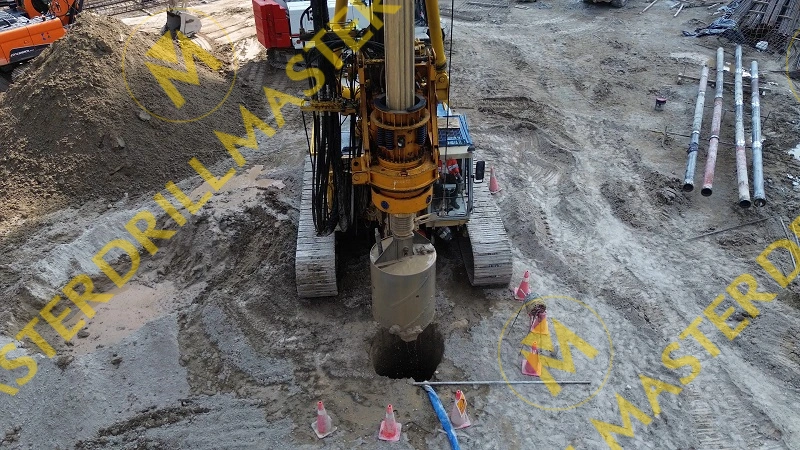
In rotary bored piling, the Kelly bar is a critical component that connects the rotary drilling rig’s powerhead to the drilling tool and transmits torque and axial loads. Its suitability directly affects drilling efficiency, effective drilling depth, equipment safety, and overall construction costs. A properly selected Kelly bar allows the drilling rig to perform to its full potential. An unsuitable Kelly bar can lead to several common problems, including:
- Installation difficulties: Flanges, pin holes, keyways, or connection heads may not align or fit properly.
- Insufficient torque transmission: The Kelly bar may slip, deliver inadequate drilling force, or fail to cut effectively through hard strata.
- Insufficient effective drilling depth: The rig may fail to reach the design pile depth due to limitations in Kelly bar length, the number of sections, mast height, or winch capacity.
- Abnormal wear: Uneven wear, excessive vibration, or damage to the locking mechanism can shorten the service life of both the Kelly bar and the powerhead.
- Construction downtime: In severe cases, compatibility issues can cause equipment downtime, increasing repair and replacement expenses as well as project delays.
However, knowing only the drilling rig's brand and model is usually insufficient to confirm Kelly bar compatibility. Even rigs from the same manufacturer with the same model designation may require different Kelly bar specifications due to differences in production batches, optional configurations, powerhead parameters, mast height, winch systems, or connection interfaces.
Furthermore, connection dimensions, pin holes and keyways, locking mechanisms, Kelly bar diameters, section configurations, lengths, and torque ratings are not necessarily standardized across different manufacturers.
Therefore, compatibility must be assessed beyond the brand and model level by examining specific technical parameters and project requirements. These include the exact rig model, powerhead torque and rotational speed, mast height, wire rope length, Kelly bar type (interlocking or friction), pile diameter, target pile depth, and ground conditions.
The purpose of this article is to explain how to select the right Kelly bar based on the specific drilling rig model, technical specifications, and construction requirements, ensuring efficient, safe, and cost-effective rotary bored piling operations.
Choosing a compatible Kelly bar involves more than matching the bar diameter or the drilling rig brand. The rig model, drive interface, torque capacity, drilling depth, and ground conditions all affect the selection. A Kelly bar that fits one rotary drilling rig may not work properly with another, even if both machines come from the same manufacturer.
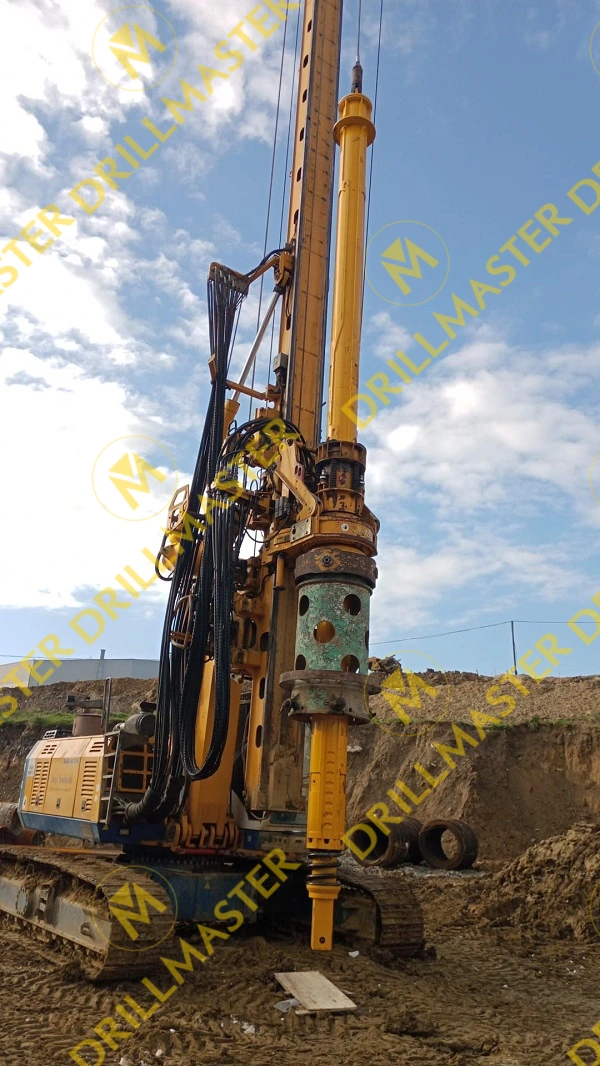
Before selecting a Kelly bar for Bauer, Soilmec, or other rotary drilling rigs, contractors should evaluate the following factors to ensure reliable power transmission, efficient drilling, and safe operation.
1.1 Rig Brand and Exact Model
The first step is to identify the drilling rig's brand, complete model number, and specific version. Manufacturers such as Bauer and Soilmec offer a wide range of rotary drilling rigs with different powerhead configurations, torque ratings, and Kelly bar specifications.
Before purchasing a replacement or custom Kelly bar, check the rig's original technical documentation, powerhead specifications, and the details of the existing Kelly bar. Providing the manufacturer with the exact rig model and relevant specifications can help narrow down suitable options.
1.2 Rotary Drive Interface and Kelly Connection
The lower connection must be compatible with the drilling tools so the specifications of kelly box need to be confirmed. Key details to verify include the connection's shape, dimensions, engagement structure, and available installation space.
Importantly, the same outer diameter does not guarantee compatibility. Two Kelly bars with similar dimensions may have different drive keys, connection geometries, or structural requirements. These differences can prevent proper installation or cause excessive wear and connection damage during drilling.
1.3 Torque Capacity and Crowd Force
A Kelly bar must be capable of handling the torque and axial loads generated by the rotary drilling rig. The rig's maximum output torque is an important reference, but the selected Kelly bar must also have an appropriate allowable torque capacity based on its design and operating conditions. The goal is to achieve a balanced configuration that transmits power effectively without exceeding the Kelly bar's rated limits.
1.4 Kelly Bar Length, Sections and Drilling Depth
Kelly bar length directly affects the maximum practical drilling depth, but the relationship is not determined by the bar's nominal length alone. Contractors must consider the target pile depth, the Kelly bar's extended working length, and the length of the drilling tool.
Kelly bars are commonly available in three-, four-, or five-section configurations. Fewer sections may offer advantages in certain applications, while additional sections can provide greater reach where deeper drilling is required. However, the appropriate configuration depends on the rig's lifting system, available space, and the Kelly bar's structural design. Other factors include mast height, the Kelly bar's retracted length, drilling tool dimensions, and overhead clearance at the construction site.
It is also important to distinguish between the nominal Kelly bar length and the actual achievable borehole depth. The effective drilling depth depends on the bar's working extension, the connection arrangement, the drilling tool, and the rig's operating geometry. A longer Kelly bar does not automatically mean that the rig can drill to the same additional depth.
1.5 Drilling Method and Ground Conditions
The drilling method and geological conditions help determine whether a friction Kelly bar or an interlocking Kelly bar is more suitable.
- Friction Kelly Bar: Torque is transmitted primarily through friction between the telescopic sections. It is often suitable for general drilling applications, particularly in relatively soft or moderately resistant ground, depending on the bar design and rig capacity.
- Interlocking Kelly Bar: Mechanical locking components engage between sections to transmit torque more directly. This configuration is often preferred for demanding drilling conditions, including dense soils, gravel layers, and hard rock, when the required torque exceeds what a suitable friction configuration can reliably provide.
Ground conditions should not be evaluated in isolation. Contractors should also consider the pile diameter, drilling tool type, required penetration rate, and target depth. For example, drilling in hard rock may require an interlocking Kelly bar with an appropriate torque rating, together with a compatible rock drilling tool.
| Brand | Selection Key Points |
| Bauer | Precise matching of BK series models with the Kelly box, rated torque ratings, effective drilling depth restricted by the mast and winches, interlocking/friction locking mechanisms, and shock-absorption and noise-reduction configurations. |
| Soilmec | Proprietary Kelly box dimension standards, torque and depth ranges corresponding to the number of sections and diameter of the Kelly bar, and rotary head parameter matching for SR series models. |
| Liebherr | Specific machine models, Kelly bar interfaces, torque ratings, and effective working depths. |
| Casagrande | Kelly bar specifications and construction configurations. |
| IMT / MAIT | Correspondence between machine models and Kelly bar sizes, interfaces, and number of sections. |
| SANY / XCMG | Specific models, rotary head parameters, Kelly bar length, and torque requirements. |
| Zoomlion / Sunward | Rig versions, interface dimensions, and Kelly bar working ranges. |
| Required Information | Purpose of Verification |
| Rig brand and exact model | Determine rig model |
| Machine serial number or version, if available | Differentiate specific configuration |
| Existing Kelly Bar specifications | Compare against original Kelly Bar |
| Required drilling depth | Determine effective working length |
| Kelly Bar diameter and number of sections | Determine basic structural specifications |
| Drilling tools and ground conditions | Confirm actual construction requirements |
| Photos and dimensional drawings | Assist in checking structure and connection interfaces |
1) Provide us with your rig model, the specifications of your existing Kelly bar, and drawings of the connection interface.
2) Define your target drilling depth, torque requirements, and ground conditions.
3) We will verify the connection interface, number of sections, overall length, and torque configuration.
4) Review the technical drawings and final specifications before production begins.
5) We conduct quality inspections on the custom Kelly bar to verify its dimensions, structural integrity, and relevant performance metrics.
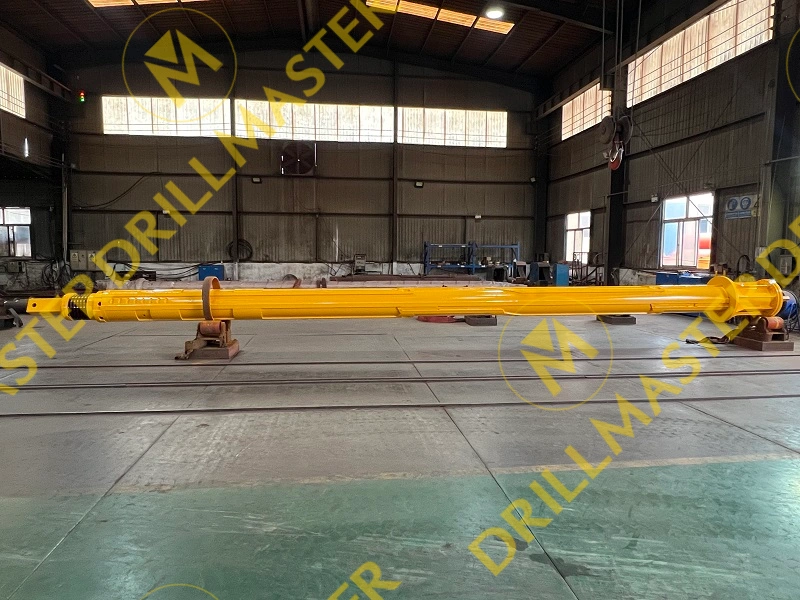
Looking for a replacement or custom Kelly bar for your Bauer, Soilmec, or other rotary drilling rig? Send us your rig model, Kelly bar specifications, and connection drawings. Our professional team can help evaluate the required configuration for your drilling application.
Contact Us