E-mail: [email protected] Whatsapp: +8613647327093 Tel: +86-731-8403-0163
E-mail: [email protected] Whatsapp: +8613647327093 Tel: +86-731-8403-0163
On job sites, you may often hear complaints like:
"Why are we finishing only a few piles a day?"
"Cleaning the hole all day—fuel consumption is insane!"
"The schedule keeps getting delayed, and the client is pushing every day!"
The rig is clearly a large-tonnage machine with solid power, yet the drilling progress just doesn't increase—deep piles require repeated lowering and lifting, mud circulation doubles, and the crew's time and cost are slowly drained. Many people instinctively blame the rig performance and start thinking about switching to a larger rig, upgrading power, or adding another working shift.
But is the rig really the problem?
Many experienced crews know this well: even with a strong rig, using an unsuitable drilling bucket capacity is like having a big horse pull a small cart—or worse, a small horse pulling a big cart. Either you waste potential, or you overload the equipment. We tend to focus on rig tonnage, engine power, or hoisting capacity, but neglect a factor that has a far more direct impact on efficiency—the capacity of the drilling bucket.
A bucket that's too small seems light and flexible, but removes very little soil each time. One pile may require a dozen or even dozens of lifts, and most of the day gets wasted on the up-and-down cycle.
A bucket that's too large looks impressive, but fills slowly, is heavy to lift, slows down the winch, and may even drag down the entire rig's movements.
The real secret to efficiency is often not replacing expensive equipment but—choosing the right bucket capacity, turning "higher efficiency" from a slogan into a result you can see on site.
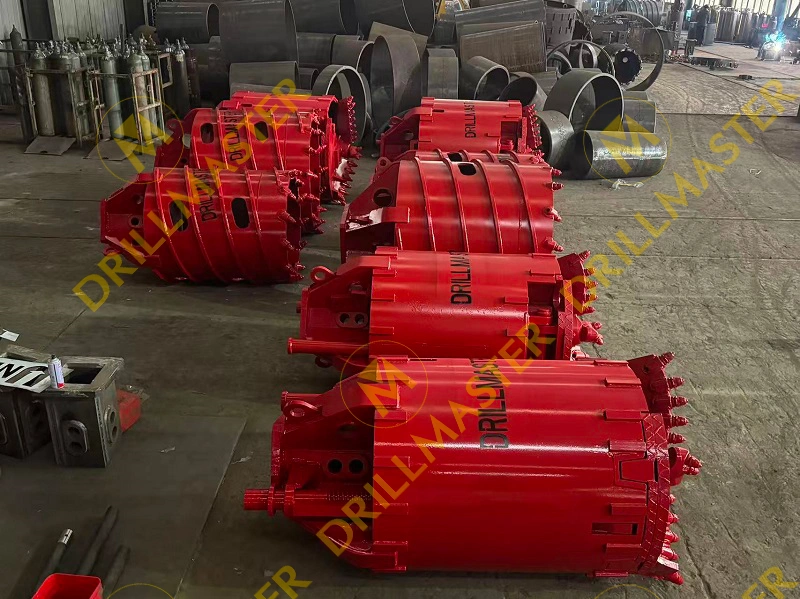
In rotary drilling, the capacity of the drilling bucket directly determines the amount of soil removed per lift and the rate of progress. Think of it this way—each bucket is one trip of transportation; capacity is how much you can load per trip. The closer the bucket capacity matches your rig's capability, the smoother the drilling.
1) Capacity determines soil per lift—the efficiency gap often starts here
If every lift removes only half a bucket, no matter how strong the rig is, you still need many repeated lifts.
Ten piles a day × 6 extra lifts per pile = 60 extra lifts.
Five extra minutes per lift = several more hours per day.
The closer the bucket capacity matches the rig's potential, the closer you get to maximum efficiency.
2) Capacity too small → double the lifts, and time cost suffers first
A small bucket feels easy to operate, but because each lift removes limited soil, you need more drilling cycles, more cleaning, more mud circulation, more time waiting for the winch.
Fuel consumption rises, working hours extend, and despite a full day of effort, progress remains slow.
In this case, the problem isn't the rig—it's the bucket not "eating enough."
3) Capacity too large → "bigger is faster" is a myth
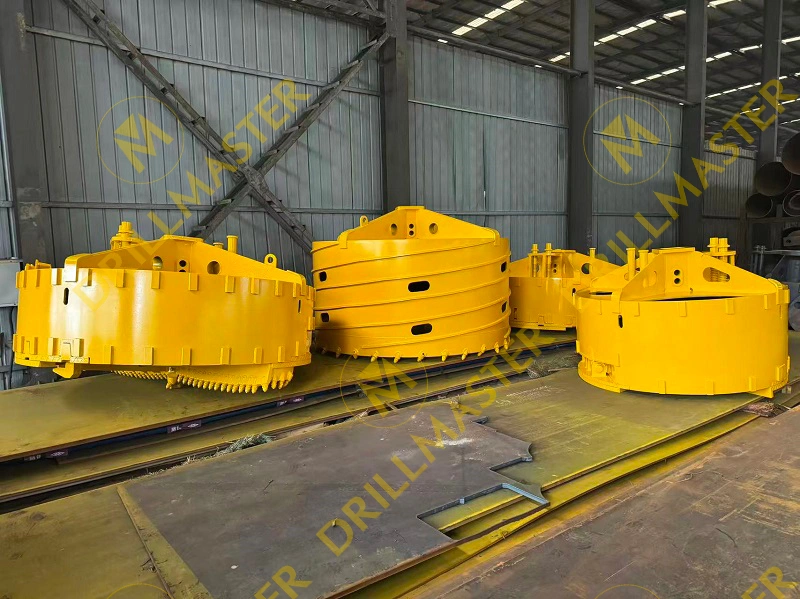
A bucket that's too large is hard to fill, especially in certain soil conditions. You may spend a long time and still not achieve a full bucket. Mud may settle, and cleaning efficiency drops instead of rising.
Plus, the heavier load increases winch strain, slows lifting, and stresses the hydraulic system—affecting equipment lifespan.
4) The key is matching: capacity must fit both rig and pile diameter
A 36-ton rig with a 2 m³ bucket may look powerful, but if the winch can't handle the load efficiently, it's like a small sedan towing a fully loaded trailer—it can move, but slowly and painfully.
Capacity selection must consider:
- Rig torque and hoisting force
- Pile diameter and soil bearing characteristics
- Mud density and hole stability
- The goal is balance—not the biggest bucket, but the right bucket.
- A matched capacity saves far more cost than increasing rig tonnage.
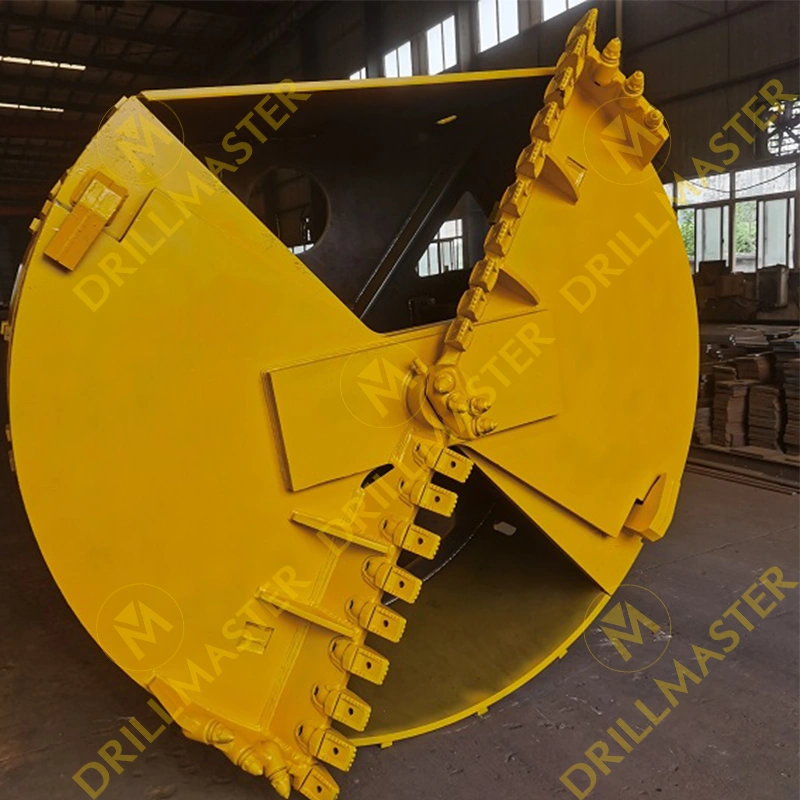
Some contractors, under schedule pressure, immediately think: "Use a bigger bucket! More soil = faster!"
Reality is exactly the opposite—larger capacity does not guarantee higher efficiency and may cause chain-reaction problems.
1) Excessive lifting weight = accelerated wear and "shortened lifespan"
A large bucket is heavy even when empty; once full:
- Wire rope stays under high tension → fatigue, stretching, broken strands
- Hydraulic pressure rises → valves and pumps overheat
- Movements slow down → vibration and noise increase
- Wear accelerates → hidden maintenance cost rises
You might save a little time today, only to have the rig "lie down" tomorrow.
2) Slow filling & more bottom residue → lower cleaning efficiency
Large buckets fill slowly in:
- Silt, soft clay
- Mixed fill, gravel, cobble layers
Common issues include:
- Long loading time, still not full
- Poor contact with soil → uneven grabbing
- Residue at the bottom → requiring extra cleaning cycles
Ironically, the large bucket ends up creating morework.
3) Heavy loads slow rotation & increase fuel consumption
With a full large bucket:
- Rotation load increases → slower swings
- Lifting load increases → engine strain
- Hydraulic pressure rises → more fuel, higher oil temperature
More capacity ends up consuming more diesel and more cycle time per bucket.
4) Bigger capacity ≠ better
Large capacity leads to:
- Faster equipment aging
- Lower cleaning efficiency
- Higher fuel consumption
- Slower movement
- Worse mud stability
Smart contractors don't chase "the biggest bucket"—they choose the best-matched bucket.
Bucket capacity is not a fixed formula—it must adapt to soil conditions because filling behavior, soil structure, and penetration resistance vary.
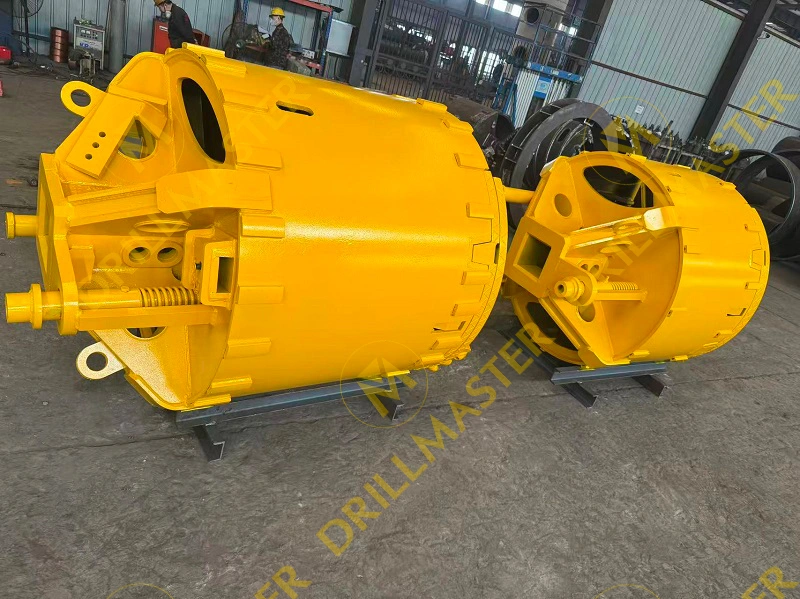
1) Soft soil / silt: capacity can be increased moderately
Characteristics:
- Loose soil, easy to shape
- Fast loading
- Smooth bucket closing
Recommendations:
- Increase capacity by 10–20%
- Prefer large-opening, lightweight buckets
- Keep mud density stable
Ideal for speed-focused projects
2) Gravel layer / dense soil: smaller or weighted buckets perform better
Characteristics:
- High resistance
- Large buckets fill poorly
- Stones may jam the bucket
Recommendations:
- Reduce capacity by 10–20%
- Use weighted buckets for better penetration
- Strengthened cutting edges and teeth
- Slower lifting to ensure proper filling
In these layers, "one fully filled small bucket" is faster than "ten poorly filled large buckets."
3) Flowing sand / slurry-like soils: stability first, capacity should not be large
Characteristics:
- High fluidity
- Poor shape retention
- Mud easily leaks → "false full bucket"
Recommendations:
- Use medium or slightly small capacity
- Increase mud density for stability
- Increase penetration speed
- Adjust circulation to avoid overly thin mud
- The goal is reliable filling, not maximum volume.
Summary rule: adapt capacity to soil
- Soft → bigger
- Hard → smaller
- Flowing → stable, avoid oversized
In short:
The soil is the lead actor; the drilling bucket is just the tool. Matching matters more than guessing.
Bucket selection comes down to one principle:
"Not too heavy, and fills full."
Meaning:
- The rig can lift it easily (not overloaded)
- Each bucket can be filled or nearly filled (efficient loading)
Here are three quick on-site checks:
1) Is the lifting load often near the limit? → Capacity too large
Signs:
- Pressure gauge near the red zone
- Excessive rope tension
- Slower hoisting
- Engine bogging
Consequences:
- Faster winch wear
- Higher diesel use
- Rope breakage or bucket dropping risk
Solutions:
- Reduce capacity
- Use a lighter bucket body
- Reduce fill volume in soft soils
2) Too many lifting cycles? → Capacity too small
Signs:
- Frequent lifting even for shallow piles
- Repeated cleaning per pile
- More lifts than similar job sites
This means the bucket cannot "eat enough."
Solutions:
- Increase capacity 10–20% in soft soils
- If rig tonnage allows, use a larger bucket
3) Multiple extra cleaning cycles? → Capacity mismatched with soil
Signs:
- Residue remains after cleaning
- Poor vacuum effect at bucket bottom
- Incomplete bucket closure
Solutions:
- Adjust capacity according to soil conditions
- Increase mud density in flowing layer
- Use smaller or weighted bucket in hard layer
Three-step quick method:
1. Check rig capacity
Hoisting force
Winch margin
2. Check soil conditions
Soft → larger
Hard → smaller
Flowing → avoid large capacity
3. Check site performance
Lifting strain → too large
Too frequent lifts → too small
Repeated cleaning → mismatched
Right capacity = fast, stable, safe.
In rotary drilling, many people blame slow efficiency on "not enough rig tonnage" or "insufficient power." But as you've seen, the true bottleneck often lies in a small, easily overlooked detail—the drilling bucket capacity.
Switching buckets is far cheaper and easier than switching rigs, yet can deliver efficiency gains close to upgrading equipment—something increasing tonnage or power cannot match in cost-effectiveness.
Before your next project, ask yourself:
Is your bucket capacity matched to your rig?
In certain soils, is the bucket failing to fill?
Do you see unstable lifting speeds or frequent extra cleaning cycles?
Is the bucket so large that it overloads the machine?
A few minutes of checking may save days of schedule delays and thousands of liters of diesel.
For professional contractors, knowing how to select the right capacity is a capability—and more importantly, a way to prevent unnecessary machine stress and time loss.
From years of supporting contractors, one insight holds true:
Professional capacity selection is far more cost-effective than spending tens of thousands upgrading your rig.Choosing the right drilling bucket is the start of your next efficiency boost.
Contact Us