E-mail: [email protected] Whatsapp: +8613647327093 Tel: +86-731-8403-0163
E-mail: [email protected] Whatsapp: +8613647327093 Tel: +86-731-8403-0163
The tremie pipe is key equipment in the construction of underwater cast-in-place piles and slurry-supported bored cast-in-place piles. It is mainly used to continuously and stably deliver concrete to the bottom of the pile hole, ensuring smooth concrete placement in underwater or mud/slurry environments and reducing quality risks caused by direct contact between concrete and water or slurry. During concreting, the tremie pipe must maintain good sealing performance, sufficient embedment depth, and continuous concrete delivery capacity to ensure smooth placement operations. However, in actual construction, problems such as water and grout leakage from the tremie pipe, poor joint sealing, improper control of embedment depth, interruption of concreting, and pipe blockage often occur. These problems not only reduce construction efficiency and increase rework and maintenance costs, but may also cause pile quality defects such as concrete segregation, mud inclusion, and broken piles, thereby affecting the bearing capacity of the pile foundation and the overall safety of the project. Therefore, understanding the common problems in the tremie pipe concreting process and their preventive measures is crucial for ensuring the quality of pile foundation construction.
1.1 What Causes Tremie Pipe Leakage?
Several factors can cause water or cement slurry to leak from a tremie pipe during concrete pouring.
- Cracks, deformation, or wear in the pipe body: Repeated use, improper handling, or mechanical damage may weaken the pipe wall and create potential leakage points.
- Failure of threaded or wired connections: Loose connections or damaged mating surfaces can prevent the pipe sections from forming a reliable seal.
- Aging or damage to sealing rings: Seals may become worn, cracked, or deformed over time. Incorrect installation can also reduce their sealing effectiveness.
- Improperly connected pipe sections: Connections may not be tightened adequately, or concrete residue and debris may remain on the mating surfaces, preventing a tight fit.
1.2 What Risks Does Leakage Create?
Tremie pipe leakage can affect both the concrete pouring process and the quality of the finished pile.
- Water or slurry contamination: Water or drilling slurry may enter the tremie pipe, potentially affecting the concrete mix and its performance.
- Concrete segregation and cement paste loss: Leakage can disrupt the uniformity of the concrete and contribute to segregation or the loss of cement paste.
- Restricted concrete flow: Leakage and connection problems may interfere with smooth concrete delivery, increasing the risk of pipe blockage or interruptions during pouring.
- Pile integrity defects: In severe cases, leakage-related problems may contribute to soil or slurry inclusions, discontinuities in the concrete, or other defects that compromise pile integrity.
The actual impact depends on the leakage location, severity, duration, and the conditions inside the borehole. Early detection is therefore essential to prevent a minor sealing problem from developing into a more serious construction issue.
1.3 How to Prevent and Handle Leakage
- Inspect the pipe before use: Check the pipe body for cracks, deformation, corrosion, and excessive wear. Examine threads, sealing rings, and other connection components for damage.
- Conduct sealing tests: Perform the required watertightness or joint-sealing tests in accordance with the equipment manufacturer's instructions and the project specifications. Confirm that the pipe assembly can maintain the required seal before concrete pouring begins.
- Ensure clean and secure connections: Remove concrete residue, soil, and other debris from mating surfaces. Install sealing rings correctly and tighten all connections according to the specified requirements.
- Monitor the pouring process: Observe concrete flow, changes in delivery conditions, and any signs of abnormal leakage. Unexpected changes should be investigated promptly rather than ignored.
- Respond promptly to detected leakage: Assess the leakage location and severity, as well as its potential impact on concrete quality and pouring continuity. Follow the approved construction method and project procedures to determine the appropriate corrective action.
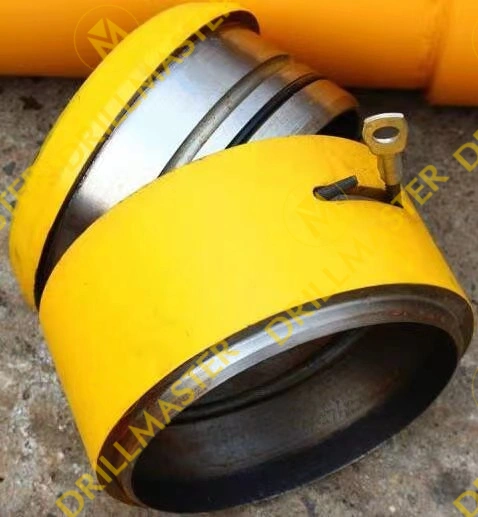
2.1 Common Causes of Poor Joint Sealing
- Incorrect or worn sealing rings: Sealing rings that do not match the pipe specifications may fail to provide adequate sealing pressure. Repeated use can also cause aging, deformation, or reduced elasticity.
- Damaged or contaminated connections: Deformed, worn, or uneven connections may prevent the joint from fitting tightly. Concrete residue, soil, and other debris can create gaps between the mating surfaces.
- Uneven bolt tightening: If bolts are tightened unevenly, the connection may experience unbalanced forces, resulting in gaps and reduced sealing effectiveness.
- Misaligned pipe sections: Improper alignment during installation can prevent the sealing surfaces from making full contact, increasing the likelihood of leakage.
- Damage caused by repeated assembly and disassembly: Frequent handling may wear threads, damage flange faces, or deform sealing components, gradually reducing the reliability of the connection.
2.2 Potential Consequences
- Water or cement slurry leakage: Water or slurry entering the pipe through a poorly sealed joint may affect the concrete's uniformity and pouring quality.
- Reduced connection strength and sealing performance: Damaged or improperly assembled joints may compromise the mechanical reliability and overall sealing integrity of the pipe system.
- Joint loosening during pouring: Vibration, handling, or inadequate tightening may cause connections to loosen, increasing the risk of leakage, equipment failure, and interruptions to concrete placement.
If these problems are not identified in time, they may disrupt continuous pouring and increase the risk of defects in the finished pile.
2.3 Preventive Measures
- Select compatible sealing components: Choose sealing rings, bolts, and connection accessories that match the tremie pipe model and joint design. Avoid using components with unsuitable dimensions or specifications.
- Inspect and clean joint surfaces: Before each assembly, remove concrete residue and debris from flange faces and other mating surfaces. Check sealing rings for cracks, deformation, aging, and other signs of damage.
- Tighten connections correctly: Follow the specified tightening sequence and requirements to ensure that the joint is evenly seated. Avoid uneven tightening that may cause localized stress or gaps.
- Establish a regular inspection and maintenance schedule: Inspect pipe sections, flange faces, threads, bolts, and sealing components at appropriate intervals, particularly for equipment used frequently.
- Replace damaged components promptly: Replace parts with significant deformation, excessive wear, or damage that prevents reliable sealing. Do not rely on repeated tightening to compensate for defective components.
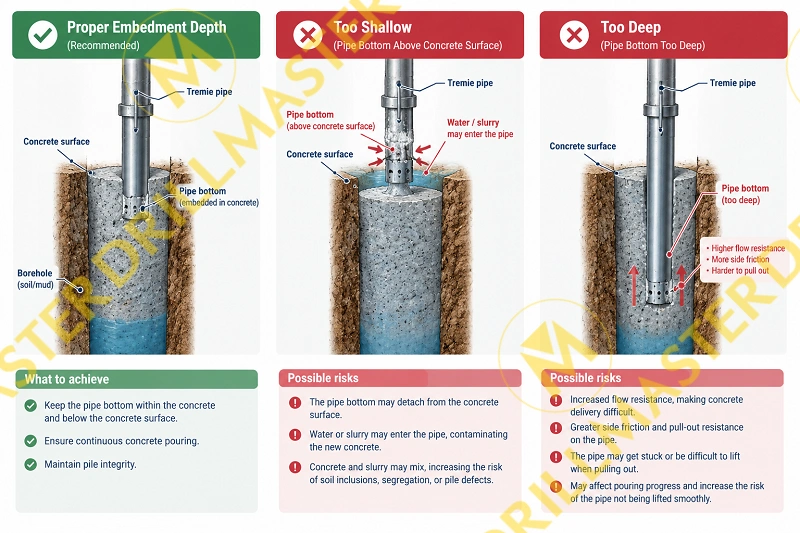
3.1 What Happens When the Pipe Is Embedded Too Shallow?
When the tremie pipe is not embedded deeply enough in the concrete, the lower end may become exposed above the concrete surface, breaking the seal between the pipe outlet and the fresh concrete.
- The pipe outlet may leave the concrete: If the concrete level rises or the pipe is lifted too far, the lower end may become exposed, interrupting the required submerged discharge condition.
- Water or drilling slurry may enter the pipe: Once the pipe outlet loses its embedment, surrounding water or slurry may enter and contaminate the newly delivered concrete.
- The risk of pile defects increases: Mixing between concrete and slurry may cause soil or slurry inclusions, segregation, or discontinuities in the pile. In severe cases, this can compromise pile integrity.
3.2 What Happens When the Pipe Is Embedded Too Deep?
- Increased resistance to concrete flow: Excessive embedment may increase the resistance encountered during discharge, making concrete placement more difficult under certain site conditions.
- Greater friction and lifting resistance: The embedded pipe section may experience increased contact resistance from the surrounding concrete, making it harder to lift.
- Pipe blockage or difficult removal: During pipe lifting or section removal, excessive embedment may increase the risk of the pipe becoming stuck or difficult to extract.
- Delays and interrupted operations: If the pipe cannot be lifted smoothly, concrete placement may be delayed, potentially affecting pouring continuity and increasing construction risks.
The actual effects depend on factors such as concrete workability, embedment depth, pipe dimensions, and site conditions. Excessive embedment should therefore be avoided without compromising the minimum embedment required by the construction method.
3.3 How to Control Embedment Depth
- Confirm the initial installation depth: Before concrete pouring begins, verify the tremie pipe length, lower-end elevation, and relevant installation parameters to establish a reliable starting point.
- Calculate the actual embedment depth: Use measurements of the concrete surface, the position of the pipe outlet, and the lengths of the assembled pipe sections to determine the current embedment depth. Concrete volume records can provide an additional reference for checking the estimated concrete level.
- Recheck before lifting or removing pipe sections: Before each pipe section is removed, confirm the concrete surface elevation and the position of the pipe outlet. This helps prevent accidental exposure of the pipe end.
- Follow the specified embedment range: Maintain the embedment depth required by the project design, applicable standards, and approved construction method. Do not rely on a fixed value without considering the actual site requirements.
- Plan pipe lifting carefully: Calculate the allowable lifting height before removing a section, ensuring that the pipe outlet remains embedded in the concrete throughout the operation.
4.1 Common Causes of Interrupted Concrete Pouring
- Delayed concrete supply: Ready-mixed concrete trucks may arrive late because of traffic, production delays, or poor coordination between the batching plant and construction site.
- Unsuitable concrete workability: If concrete loses workability during transportation or waiting, its flow through the tremie pipe may become more difficult.
- Tremie pipe leakage or blockage: Defective joints, damaged seals, or internal obstructions may prevent normal concrete discharge.
- Equipment failure: Malfunctions involving lifting equipment, cranes, or other supporting machinery can delay pipe handling and concrete placement.
- Poor site coordination: Inefficient scheduling of concrete deliveries, pipe section removal, and on-site operations may create unnecessary waiting periods.
4.2 Risks Associated with Pouring Interruptions
- Increased blockage risk: As concrete waits, its workability may decrease, making it more difficult to discharge through the tremie pipe.
- Poor bonding between concrete layers: A prolonged delay may create unfavorable conditions at the interface between previously placed concrete and newly delivered concrete.
- Contamination at the interface: Drilling slurry, sediment, or other contaminants may compromise the quality of the connection between successive concrete layers.
- Potential pile integrity defects: Severe interruptions may contribute to cold joints, soil or slurry inclusions, or other discontinuities that affect the structural integrity of the pile.
The severity of these risks depends on the interruption duration, concrete properties, site conditions, and whether the tremie pipe remains properly embedded.
4.3 How to Minimize Interruptions
- Coordinate concrete supply in advance: Arrange transportation schedules and delivery intervals to maintain a steady supply of concrete throughout the planned pouring operation.
- Inspect equipment before pouring: Check the tremie pipe, lifting equipment, and supporting machinery. Prepare appropriate backup arrangements where necessary.
- Control concrete workability and waiting time: Ensure that the concrete meets the specified workability requirements and that transportation, waiting, and placement times remain within the approved limits.
- Maintain detailed pouring records: Record pouring times, concrete volumes, concrete surface elevations, and tremie pipe embedment depth to identify abnormal conditions promptly.
- Prepare an emergency response plan: Establish procedures for supply delays, equipment failures, and other interruptions. If an interruption occurs, assess its duration and impact before taking corrective action in accordance with the approved construction method.
5.1 Why Does a Tremie Pipe Become Blocked?
- Insufficient concrete workability: Concrete with inadequate flowability may not move smoothly through the pipe, increasing the risk of obstruction.
- Incompatible aggregate size or unsuitable mix design: Oversized aggregates relative to the pipe's internal diameter, or an inappropriate concrete mix, may interfere with smooth discharge.
- Excessive waiting time: Prolonged delays between mixing and placement can cause workability loss, making concrete more difficult to transport through the tremie pipe.
- Concrete residue or internal damage: Hardened concrete deposits, foreign materials, or local deformation inside the pipe may restrict the flow passage.
- Misaligned joints or localized obstructions: Improperly assembled pipe sections or internal irregularities may create restrictions that interfere with concrete movement.
5.2 Warning Signs of Blockage
- A significant reduction or stoppage in concrete discharge: Concrete flows more slowly than expected or stops flowing entirely despite continued supply.
- Abnormal concrete movement inside the pipe: The concrete does not descend or discharge as expected during pouring.
- A mismatch between concrete volume and surface rise: The measured concrete level does not rise as anticipated based on the volume delivered, suggesting that the pouring process requires investigation.
- Unusually high operating resistance: Abnormal force is required when handling or lifting the tremie pipe. This may indicate an obstruction or another mechanical problem and should not be treated as definitive proof of blockage without further assessment.
When these signs appear, operators should assess the concrete supply, pipe condition, embedment depth, and other relevant site conditions before deciding on a response.
5.3 Preventive Measures and Response
- Inspect the tremie pipe before use: Check the internal passage, pipe diameter, joints, and connections. Remove residual concrete and confirm that no deformation or obstruction is present.
- Use concrete with suitable workability: Follow the approved mix design and specified workability requirements. Ensure that aggregate size is compatible with the tremie pipe and the placement method.
- Manage transportation and waiting time: Coordinate concrete deliveries to minimize unnecessary delays and prevent excessive workability loss before placement.
- Control the initial and subsequent pours: Follow the approved procedure for placing the initial batch of concrete to establish the required discharge conditions. Maintain a suitable pouring rhythm throughout the operation.
- Respond carefully when blockage occurs: Avoid forcibly lifting the tremie pipe, applying violent impacts, or dismantling pipe sections without first assessing the situation. Evaluate the suspected blockage, pipe condition, concrete surface level, and embedment depth, then implement corrective measures in accordance with the approved construction plan.
| Tremie Pipe or Pouring Problem | Potential Risks to Pile Quality |
| Water or cement slurry leakage | Concrete contamination, segregation, and soil or slurry inclusions |
| Poor joint sealing | Leakage, abnormal concrete placement, and localized deterioration in concrete quality |
| Insufficient pipe embedment depth | Slurry contamination, discontinuous concrete, and an increased risk of pile discontinuity |
| Excessive pipe embedment depth | Pipe blockage, difficulty lifting the pipe, and an increased risk of pouring interruptions |
| Concrete pouring interruptions | Cold joints, soil or slurry inclusions, and discontinuities in the pile |
| Tremie pipe blockage | Stalled concrete placement and potential quality problems at the interface between successive concrete layers |
A systematic pre-pouring inspection helps identify potential equipment problems before concrete placement begins. Checking the pipe body, joints, sealing components, and pouring preparations can reduce the risk of leakage, blockage, and interruptions during construction.
7.1 Pipe Body Inspection
- Check the pipe body for cracks, significant deformation, or severe wear that could affect its structural integrity or sealing performance.
- Inspect the internal surface to ensure it is clean and free of residual concrete or foreign materials that could obstruct concrete flow.
- Verify that the tremie pipe diameter, length, and connection type meet the construction requirements and are suitable for the planned pouring operation.
7.2 Joint and Sealing Inspection
- Check that sealing rings are intact and match the specifications of the tremie pipe and its connections.
- Inspect flange faces, bolts, and connection components for damage, deformation, wear, or other conditions that could compromise sealing.
- Conduct the necessary watertightness or joint-sealing tests in accordance with the approved construction method and equipment requirements.
7.3 Pouring Preparation
- Confirm the tremie pipe installation depth and ensure that the conditions required for the initial concrete pour have been established.
- Check concrete workability and confirm that the supply and transportation schedule can support continuous placement.- Ensure that concrete level measurement tools, pouring records, and emergency response procedures are ready before pouring begins.
Why choose Drillmaster? Because our 17 years of accumulated experience enable us to manufacture tremie pipes with reliable quality. In addition, we conduct pre-delivery sealing tests on every tremie pipe, so you can be completely free from worry about any construction issues caused by product quality problems.
Contact Us