E-mail: [email protected] Whatsapp: +8613647327093 Tel: +86-731-8403-0163
E-mail: [email protected] Whatsapp: +8613647327093 Tel: +86-731-8403-0163
1. Closely Connected to Agriculture and the Seasons
The fundamental origin of Chinese New Year can be traced back to ancient agrarian society and its understanding of cyclical time.
Early people organized production according to the movement of the sun and seasonal changes. At the end of a year, when a new round of farming was about to begin, rituals were held to worship Heaven and Earth, ancestors, and natural deities.
The purposes were to:
Give thanks for the harvest of the past year
Pray for favorable weather and abundant crops in the coming year
These rituals formed the earliest prototype of what later became the Spring Festival.
2. “Nian” Was Not Originally a Festival, but “Mature Crops”
In oracle bone inscriptions and early texts, the character “Nian” (年) originally referred to the ripening of crops.
It was later extended to mean:
A complete agricultural cycle
The end of one year and the beginning of the next
Once “Nian” became fixed as a specific point in time, people naturally began to hold celebrations and sacrificial activities around it.
3. Xia, Shang, and Zhou Dynasties: The Prototype Stage
Xia Dynasty: A relatively complete calendar system had already taken shape.
Shang and Zhou Dynasties: “Year-beginning rituals” became part of state-level ceremonial practices, with sacrifices to Heaven and ancestors as the most important activities.
However:
The timing of the “New Year” was not unified across regions
Ritual forms also varied
4. Qin and Han Dynasties: The Festival Takes Shape
This was the key stage in which Chinese New Year truly became established.
In 104 BCE, Emperor Wu of the Han Dynasty promulgated the Taichu Calendar, officially designating the first day of the first lunar month as the beginning of the year.
From that point on:
The New Year date was unified
Chinese New Year became a nationwide festival
After the Han Dynasty:
Ancestor worship, staying up late on New Year’s Eve, and New Year visits gradually became widespread
The Spring Festival evolved from a state ritual into a festival celebrated by the entire population
5. The “Nian Beast” Is Not the Origin, but Deepened the Traditions
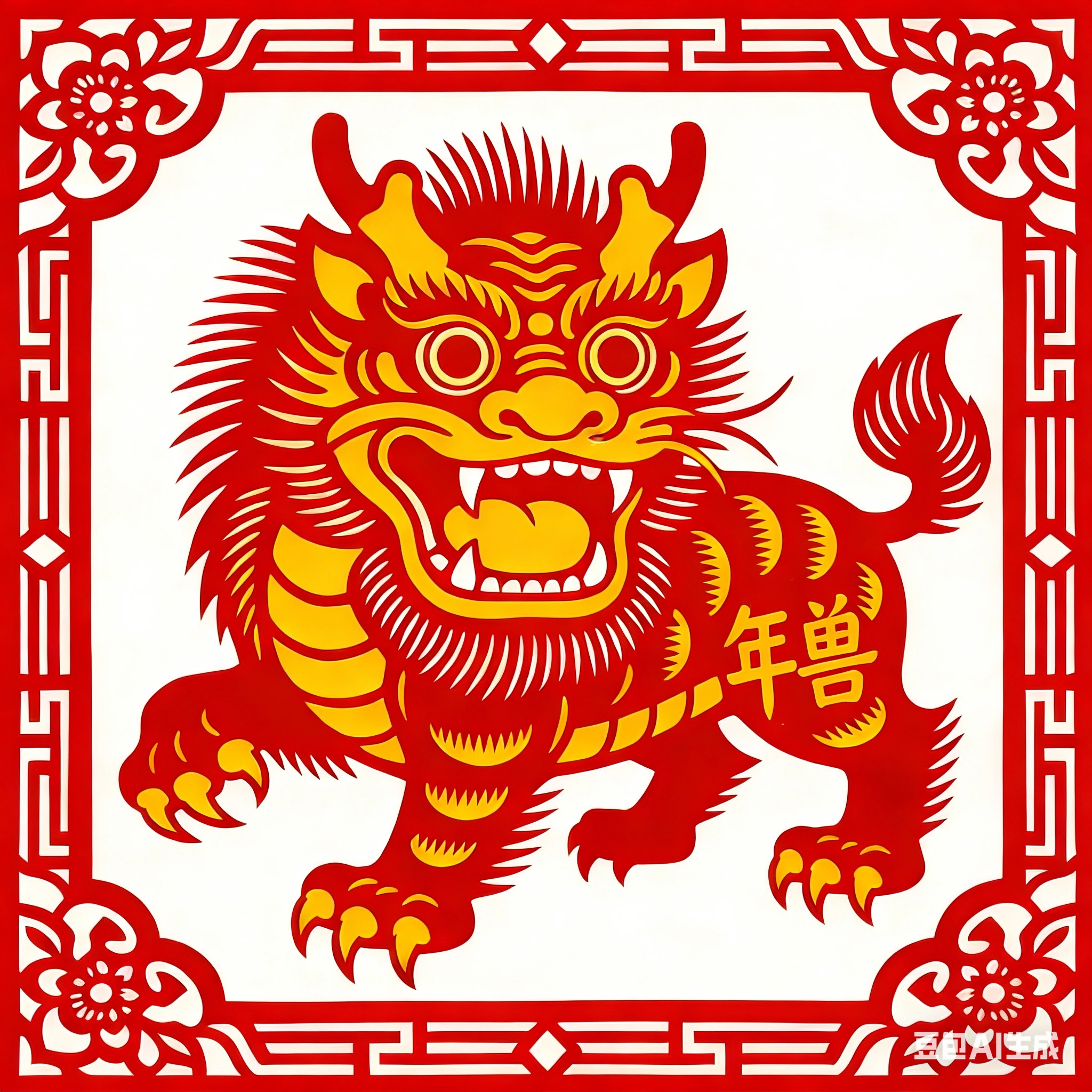
The most famous folk legend associated with Chinese New Year is the story of the Nian Beast. According to legend, a monster called Nian would appear at the end of each year.
The Nian Beast was said to fear:
The color red
Fire and flames
Loud noises
As a result, people began to:
Put up red couplets
Set off firecrackers
Keep lights on and stay awake through the night
The legend of the Nian Beast is a product of later folk evolution rather than the true origin of the festival, but it provides a vivid explanation for many Chinese New Year customs.
So now, do you know what Chinese New Year is all about?
Wishing you happiness, good health, and joyful family reunions in the Chinese New Year!
Contact Us